

Live Shopping Platform Guide: How to Choose Software That Actually Converts Browsers Into Buyers
- Rick Amico
- Feb 21
- 6 min read
Choosing a live shopping platform isn't about picking the flashiest tool with the most features. It's about finding software that actually moves people from casual browsing to clicking "buy now." The difference between platforms that convert and those that just look good often comes down to a few critical factors most businesses overlook until it's too late.
Live shopping combines real-time video demonstrations, instant Q&A interactions, and seamless checkout into one experience. When done right, it shortens the buyer journey dramatically. When done wrong, it creates friction that sends potential customers running. Here's what you need to know to choose a platform that actually delivers results.
Why Live Shopping Converts Better Than Static Content
Think about the last time you watched someone demonstrate a product in real-time versus scrolling through product photos. The live experience gives you immediate answers, builds trust through transparency, and creates urgency through limited-time offers. These psychological triggers work together to overcome buyer hesitation.
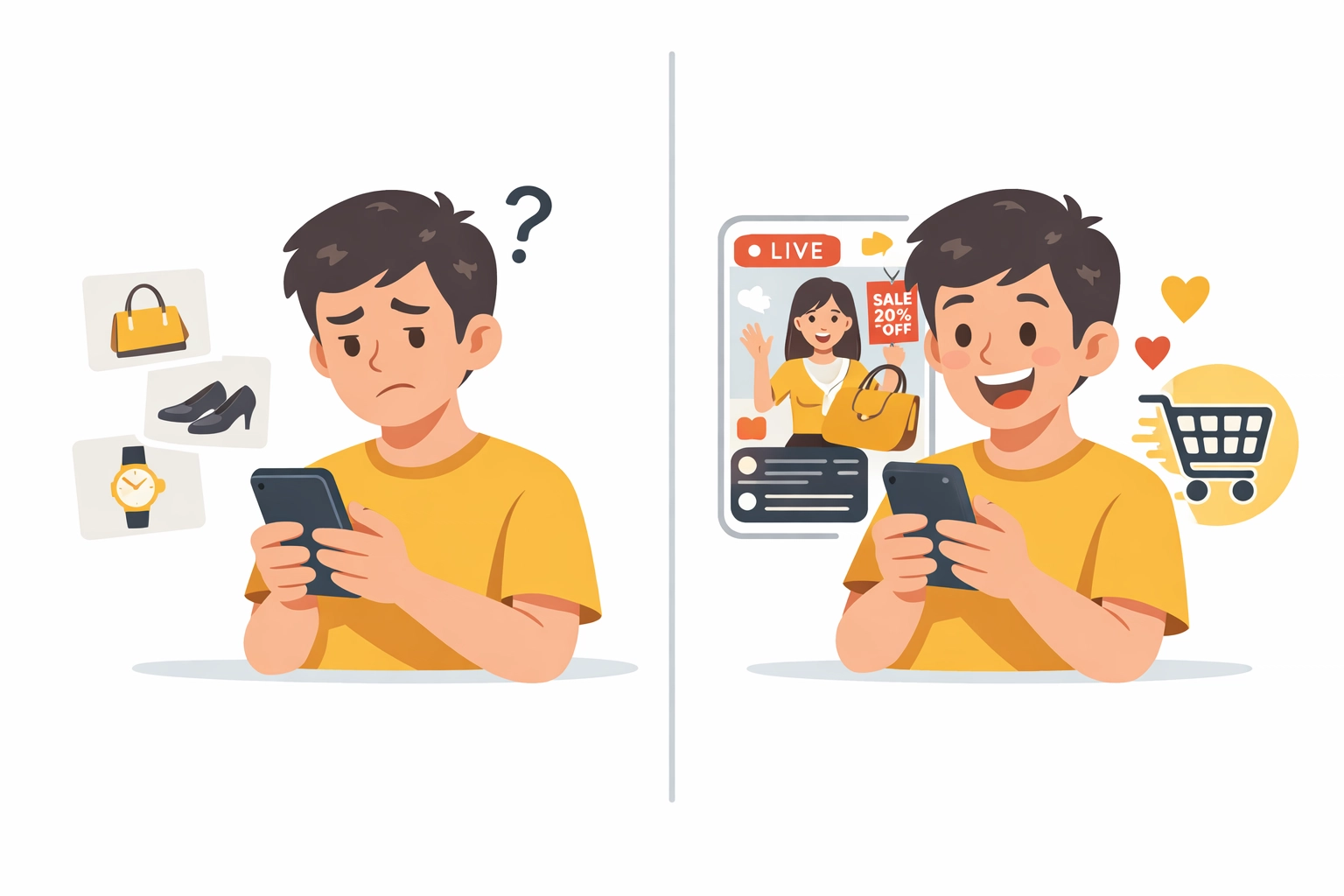
Live shopping platforms increase conversions by addressing the three main barriers to online purchases: uncertainty about product quality, questions that aren't answered in descriptions, and lack of social proof. When viewers can ask questions, see products from multiple angles, and watch others make purchases in real-time, conversion rates naturally climb.
The numbers back this up. Businesses using interactive video experiences report conversion rates 3-10x higher than traditional e-commerce pages. But these results only materialize when you choose a platform designed for conversion, not just broadcasting.
The Five Features That Separate Converting Platforms From Broadcasting Tools
1. Seamless In-Stream Checkout
If viewers have to leave your video to make a purchase, you've already lost a significant portion of them. The best live shopping platforms keep customers inside the experience with one-click checkout that doesn't interrupt the stream.
Look for platforms that integrate directly with your product catalog and support instant add-to-cart functionality. The moment between "I want this" and completing the purchase should be seconds, not minutes.
2. Real-Time Inventory Synchronization
Nothing kills conversion momentum faster than a viewer trying to buy something that's out of stock. Your platform needs to sync with your inventory management system in real-time, updating availability as purchases happen during the stream.
This prevents overselling, maintains customer trust, and allows you to create authentic scarcity when certain items are running low. Variant-level tracking is especially important if you sell products in multiple sizes, colors, or configurations.
3. Low-Latency Streaming
When there's a 10-second delay between what you say and when viewers hear it, genuine interaction becomes impossible. Low-latency streaming keeps the conversation flowing naturally and maintains the energy that drives purchases.
This technical detail matters more than most businesses realize. A platform with high latency creates awkward pauses during Q&A sessions and makes your stream feel pre-recorded rather than live. Real-time interaction is what sets live shopping apart from product videos.

4. Multi-Channel Broadcasting Capability
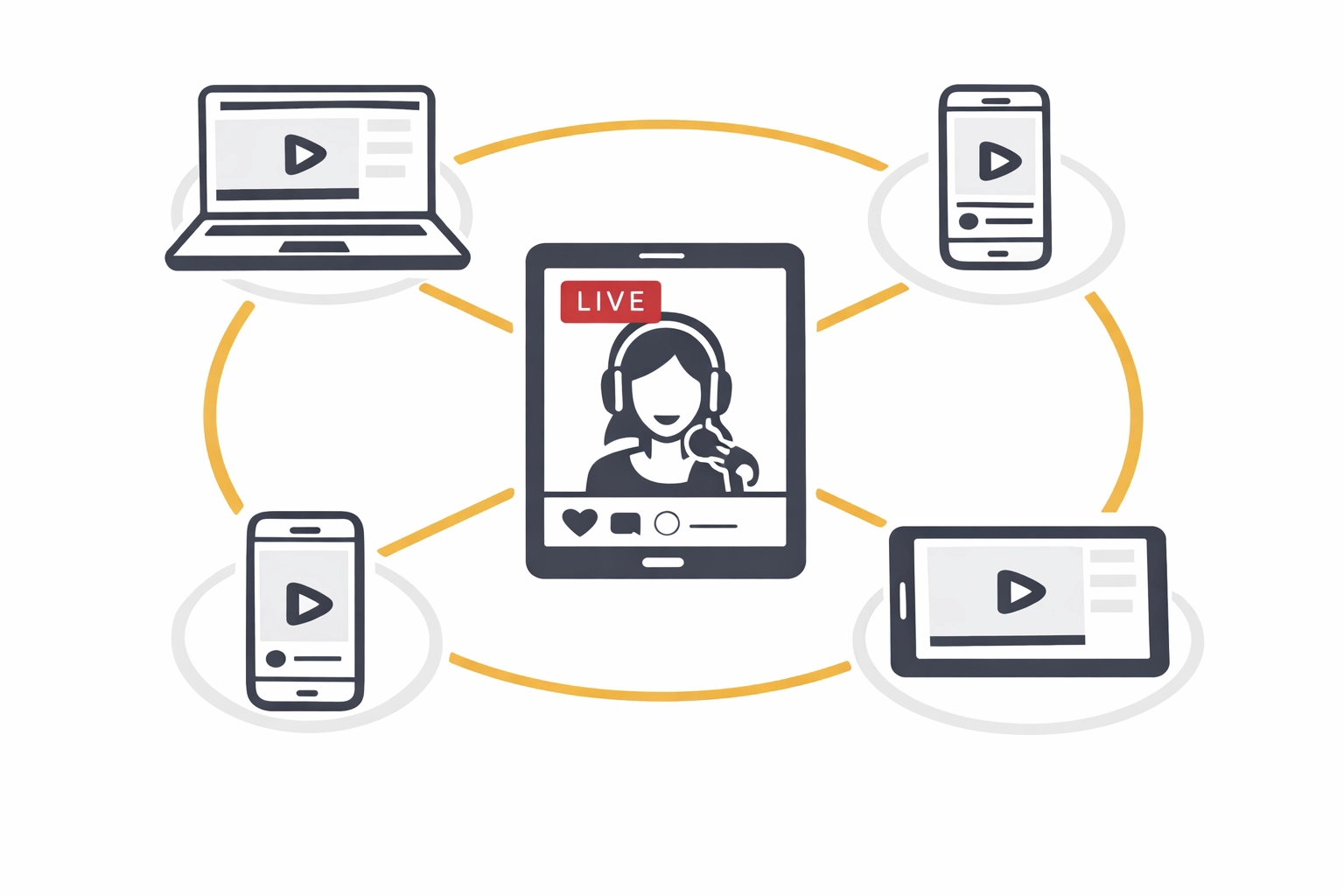
Your customers aren't all on one platform. Some prefer Instagram, others are on Facebook, and many shop directly from your website. The ability to stream simultaneously across multiple channels from a single backend multiplies your reach without multiplying your workload.
This multi-channel approach also helps you own the customer relationship rather than relying entirely on social platform algorithms. When you can bring viewers to your own site while also meeting them where they already spend time, you maximize both reach and control.
5. Replay Monetization
Live events are powerful, but they're also time-limited. The best platforms turn your live streams into evergreen content that continues converting long after the event ends. Replay monetization allows viewers who missed the live session to watch, interact with shoppable links, and purchase as if they were there in real-time.
This passive revenue stream can sometimes exceed the sales from the live event itself, making each piece of content you create work harder for your business.
Platform Types and When to Use Each
Different live shopping platforms optimize for different business models. Understanding which archetype fits your needs prevents costly mistakes.
Marketplace-Led Ecosystems work well for collectibles, resale items, and community-driven selling. Platforms like WhatNot excel at personality-driven sales through auctions and live bidding. If your business revolves around unique items and building a loyal following, these platforms shine.
E-Commerce Native Solutions integrate with your existing Shopify, WooCommerce, or custom store. These platforms prioritize seamless catalog integration, brand consistency, and customer data ownership. They're ideal for established brands adding live shopping to their existing sales channels.
Enterprise Solutions serve large retailers managing complex multi-channel operations. They offer broadcast-quality production, advanced moderation tools, and compliance features required for corporate environments. The trade-off is usually higher cost and longer implementation timelines.
Social-First Platforms like TikTok Shop maximize viral reach within their ecosystems. They're powerful for discovery and attention capture but limit your ability to build direct customer relationships outside the platform.
What Most Businesses Get Wrong When Evaluating Platforms
The biggest mistake is choosing based on features rather than friction points. A platform with 50 features means nothing if the checkout process loses half your buyers.
Start by mapping your customer journey. Where do people currently drop off? Is it during product discovery, while asking questions, or at checkout? Choose a platform that specifically addresses your biggest conversion bottlenecks.
Another common error is underestimating mobile optimization. Most live shopping happens on phones. If your platform doesn't deliver a flawless mobile experience, you're fighting an uphill battle regardless of other features.
Technical requirements also trip up businesses. Some platforms need developer resources for custom integration, while others offer plug-and-play solutions. Be honest about your team's technical capacity and timeline before committing to a platform that requires extensive customization.
The Data You Should Track (And Why It Matters)
Conversion rate is obvious, but it's not the full picture. Track these metrics to understand what's actually working:
Engagement duration shows whether your content holds attention. Higher watch time typically correlates with stronger purchase intent.
Question volume and response time indicate how interactive your sessions are. More questions mean more engagement, but only if you answer quickly enough to maintain momentum.
Cart abandonment during streams reveals friction in your checkout process. If people are adding items but not completing purchases, your payment flow needs work.
Return viewer rate measures whether you're building a community or just getting one-time visitors. Repeat viewers convert at significantly higher rates.
Replay performance tells you whether your content has evergreen value or only works live. This metric directly impacts long-term ROI.
How Interactive Features Impact Conversion
Basic live streaming is table stakes. Interactive features are what separate platforms that convert from those that just broadcast.
Touch-screen experiences that let viewers tap products to learn more without leaving the stream reduce friction at critical decision moments. AI-powered recommendations during streams can increase average order value by suggesting complementary products based on what viewers show interest in.
Smart tracking through unique invite links helps you understand which traffic sources convert best, allowing you to double down on what works. This data becomes especially valuable when you're testing different hosts, formats, or product categories.
No-download requirements remove a major barrier to entry. When viewers can join with a single click rather than installing software, participation rates jump significantly.

Integration Complexity and Time to Value
Some platforms promise quick setup but limit customization. Others offer complete control but require months of development work. Neither approach is inherently better: it depends on your priorities.
If you need to launch quickly and test whether live shopping works for your audience, prioritize platforms with fast onboarding and pre-built templates. You can always migrate to something more customized later.
If you're committed long-term and want complete control over branding, customer data, and workflows, invest the time upfront in a platform with robust API access and customization options.
The key question is whether you want to own your live shopping infrastructure or rent it as a temporary marketing tactic. This fundamental choice should guide your platform selection more than any individual feature.
Making the Final Decision
Choose a live shopping platform the same way you'd choose any business-critical software: start with a clear understanding of your goals, test with a pilot program, and measure results objectively.
Don't get distracted by feature lists that sound impressive but don't align with your actual selling process. A platform designed for fashion influencers won't serve a B2B software company well, even if both are technically "live shopping."
The platform that converts browsers into buyers is the one that eliminates friction at every step of your customer journey. Map that journey, identify the friction points, and choose the platform that specifically addresses those challenges for your business model.

If you're exploring interactive presentation platforms that combine live engagement with seamless conversion tools, focus on solutions built for your specific selling style. The right platform won't just let you broadcast: it'll turn your presentations into revenue-generating engines that work whether you're live or replaying content weeks later.
The best live shopping platform for your business is the one that matches how you actually sell, integrates with your existing systems, and removes barriers between viewer interest and completed purchases. Everything else is just noise.
Comments