

The Ultimate Guide to Live Shopping Platforms: Turn Every Webinar Into a Checkout Experience
- Rick Amico
- Feb 5
- 6 min read
Traditional webinar platforms like Zoom weren't built for selling. They're meeting tools: designed for collaboration, screen sharing, and conversation. But when you're trying to close deals, demonstrate products, or drive conversions during a live presentation, you need more than a basic video call. You need a live shopping platform that transforms passive viewers into active buyers without ever leaving the stream.
Live shopping platforms embed checkout experiences directly into your webinars, allowing participants to browse products, ask questions, and complete purchases in real time. It's the difference between hosting a presentation and running a revenue-generating sales event.
What Is a Live Shopping Platform?
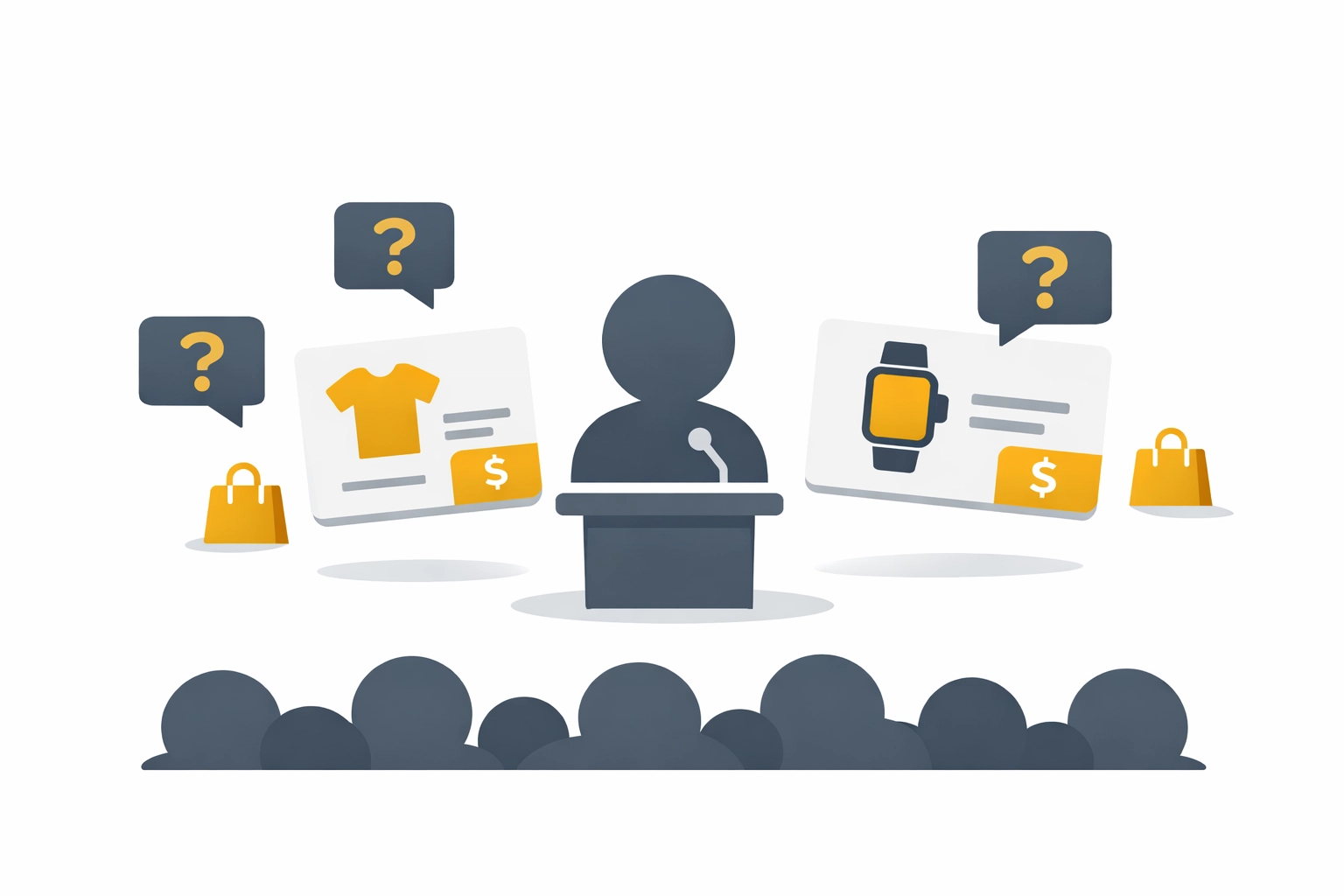
A live shopping platform combines live video streaming with interactive commerce features. Unlike standard webinar software, these platforms include shoppable product displays, in-stream checkout, real-time Q&A, product tagging, and instant purchase capabilities: all within the same viewing experience.
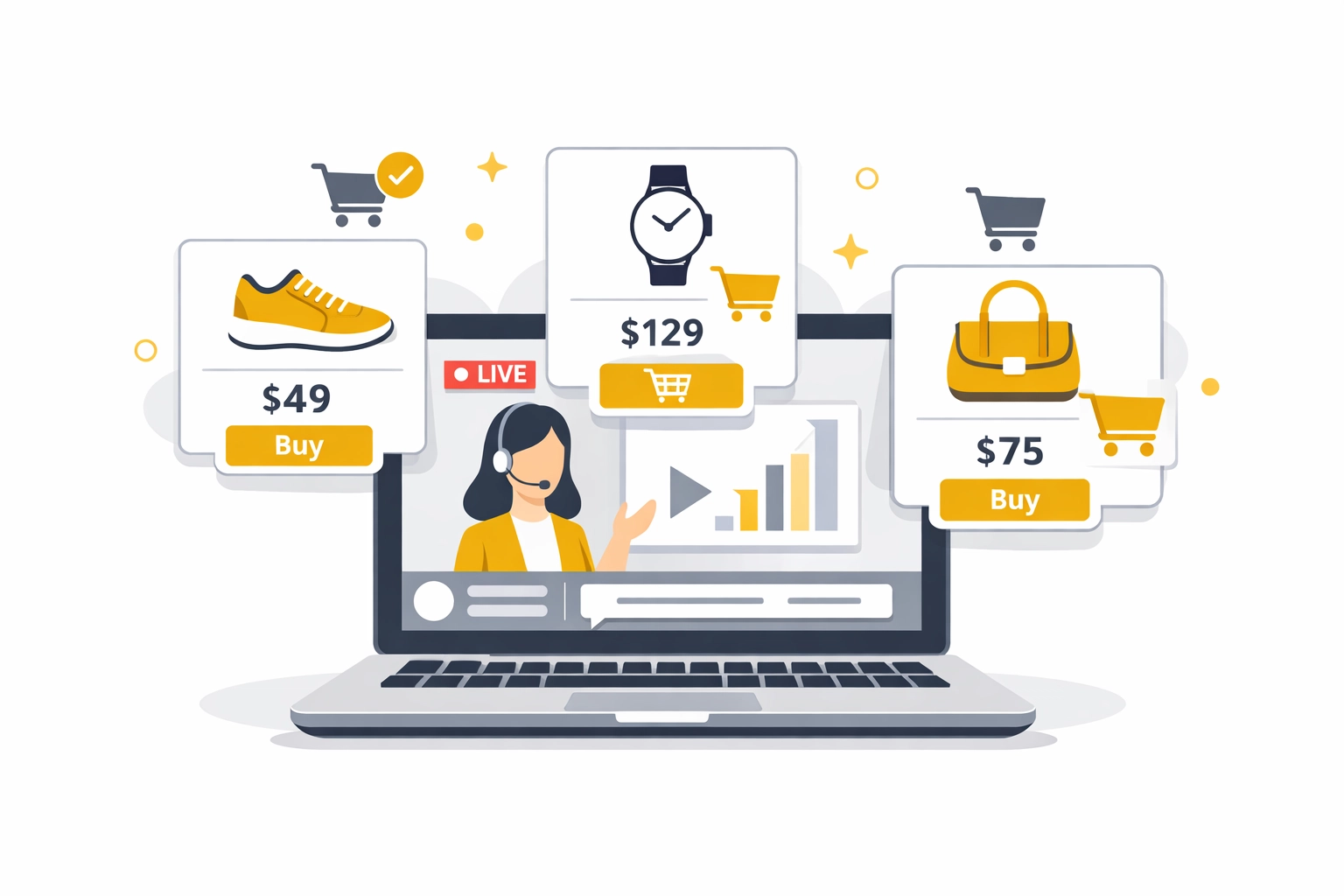
The goal is simple: remove friction between discovery and purchase. When viewers see something they want during your presentation, they can buy it immediately without navigating away, opening another tab, or remembering to come back later.
US livestream e-commerce sales grew nearly 50% in 2025 to $14.64 billion, with buyer participation jumping 21.5% year-over-year. The market is shifting fast, and businesses that integrate live shopping into their webinar strategy are seeing measurable improvements in conversion rates.
Why Traditional Webinar Platforms Fall Short for Selling
Platforms like Zoom, Microsoft Teams, and Google Meet excel at hosting meetings. But they lack the infrastructure needed to support active selling during a presentation.
Here's what's missing:
No embedded checkout – Viewers must leave the stream to complete a purchase
Limited product displays – No way to showcase items with pricing, variants, or inventory
Poor conversion tracking – Difficult to attribute sales to specific presentations or presenters
No interactive engagement tools – Minimal features for polls, Q&A, or real-time product questions
Zero post-event shopping – Once the webinar ends, the buying opportunity disappears
A live shopping platform solves these problems by building commerce functionality into the presentation itself. Viewers stay engaged, conversions happen faster, and you maintain control over the entire customer journey.
Key Features of a Live Shopping Platform
When evaluating live shopping platforms for your business, look for these core capabilities:
Embedded Checkout
The most critical feature is in-stream purchasing. Customers should be able to add items to their cart, select variants (size, color, quantity), and complete checkout without leaving the video. Platforms like Channelize and Sprii offer one-tap purchasing embedded directly in the livestream interface.
Shoppable Product Tags
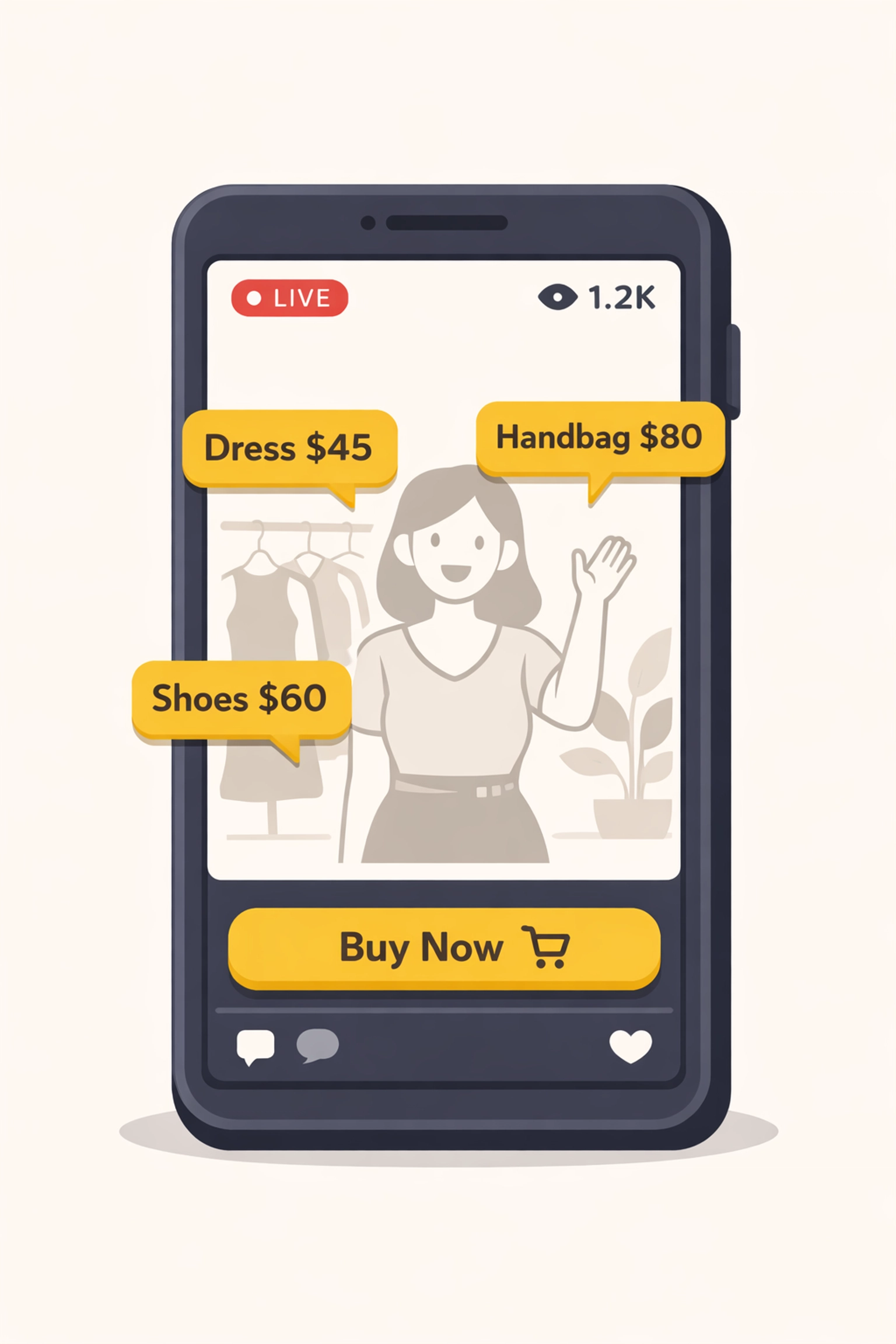
During your presentation, you should be able to tag specific products that appear as clickable overlays or sidebars. When viewers click a tag, they see product details, pricing, and purchase options: while the stream continues playing.
Multi-Channel Broadcasting
Strong platforms support simulcasting across multiple channels: your website, Facebook, Instagram, TikTok, and YouTube simultaneously. This expands your reach while centralizing analytics and tracking.
Customer Data Ownership
Unlike marketplace-dependent platforms (Amazon Live, TikTok Shop), the best live shopping tools let you own the customer relationship. You control the data, the email list, and the post-purchase experience.
Real-Time Analytics
Track views, engagement, purchases, and customer lifetime value during and after the event. Platforms like Bambuser and Sprii provide detailed dashboards showing which products generated interest and which moments drove conversions.
Integration with Existing E-Commerce Stack
Your live shopping platform should integrate seamlessly with Shopify, WooCommerce, or your existing CRM. This ensures inventory syncs in real time and orders flow directly into your fulfillment process.
Top Live Shopping Platforms in 2026
Channelize
Best for DTC e-commerce brands running live shopping on their own websites. Channelize offers embedded live video, in-stream checkout, and simulcasting to social channels. It's particularly strong for Shopify stores, beauty brands, and lifestyle products. The platform emphasizes owned-audience engagement rather than relying on marketplace traffic.
Sprii
Designed for retailers who want to run consistent, frequent live shopping events. Sprii provides complete retail functionality across web, Facebook, and Instagram, with advanced overlays, product tagging, and deep analytics. It's built for businesses that treat live shopping as a core revenue channel, not an occasional experiment.
TikTok Shop
Ideal for brands targeting younger audiences with lower-ticket products. TikTok Shop leverages the platform's massive user base (1+ billion monthly active users) and creator-driven model. Checkout happens within the TikTok app, and integration with Shopify makes setup straightforward. However, you're dependent on TikTok's algorithm and marketplace dynamics.
Amazon Live
Gives you access to Amazon's built-in shopping audience. Interactive streams are embedded on product pages, and the shoppable carousel enables one-tap purchases. Best for brands already established on Amazon who want to drive incremental sales through live demonstrations.
CommentSold
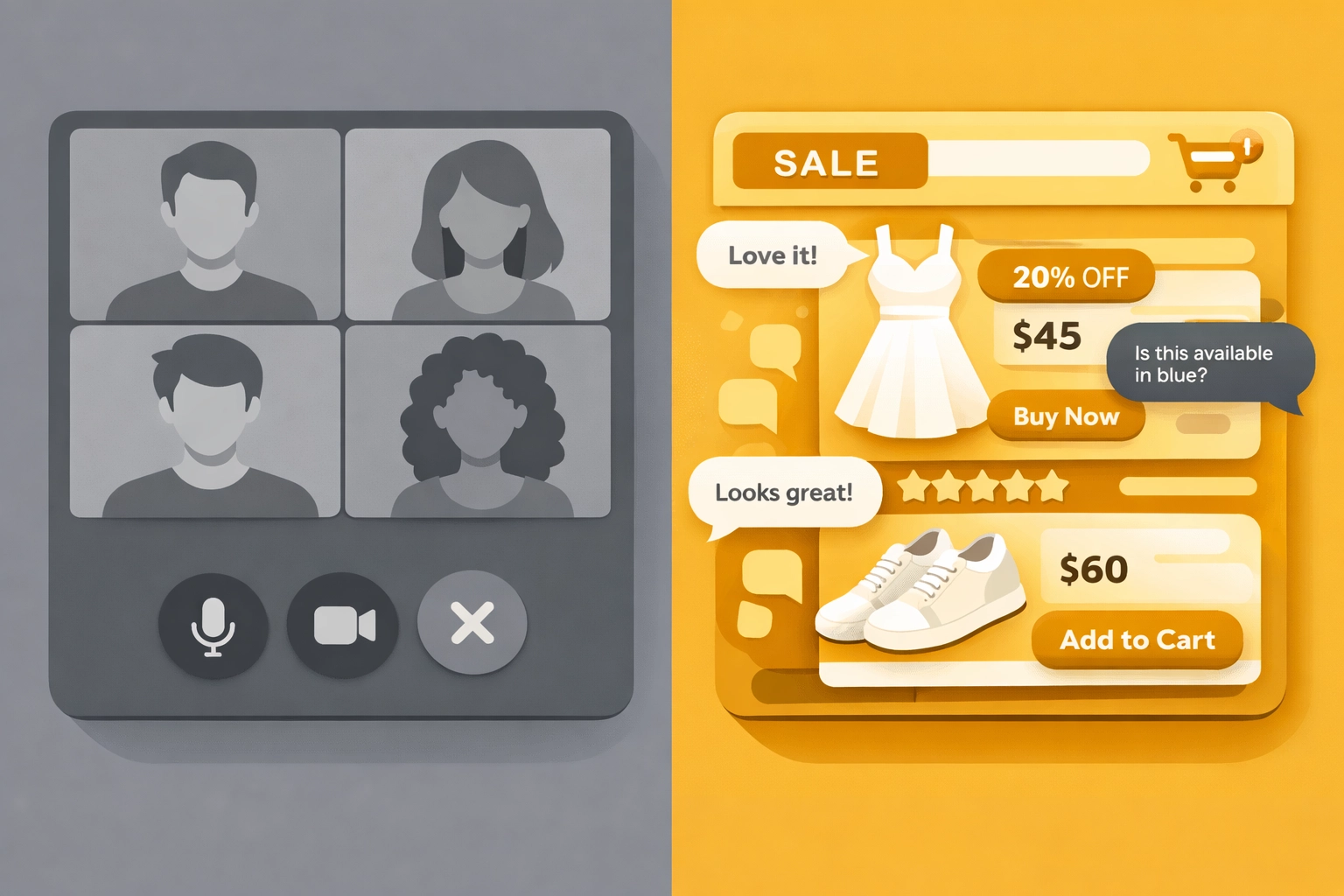
Strong choice for fashion brands and Facebook boutiques. CommentSold lets customers purchase products by commenting during live video, making checkout feel conversational and low-friction. It's particularly effective for apparel, accessories, and fast-moving inventory.
Bambuser
Enterprise-level platform offering broadcast-quality production, advanced analytics, and detailed customer behavior tracking. Bambuser is built for global brands that need polished, professional live shopping events with tight integration into existing marketing workflows.
How Live Shopping Platforms Increase Webinar Conversions
Live shopping platforms don't just add checkout buttons: they fundamentally change how viewers engage with your content.
Instant Decision-Making
When customers can buy immediately, they act on impulse and excitement. Traditional webinars require viewers to write down product names, visit your website later, and navigate your sales funnel. By the time they get there, the moment has passed. Live shopping removes that delay.
Social Proof in Real Time
Viewers see other participants asking questions, making purchases, and engaging with the host. This creates urgency and validation. If someone buys a product during the stream, that social proof influences others watching.
Interactive Q&A
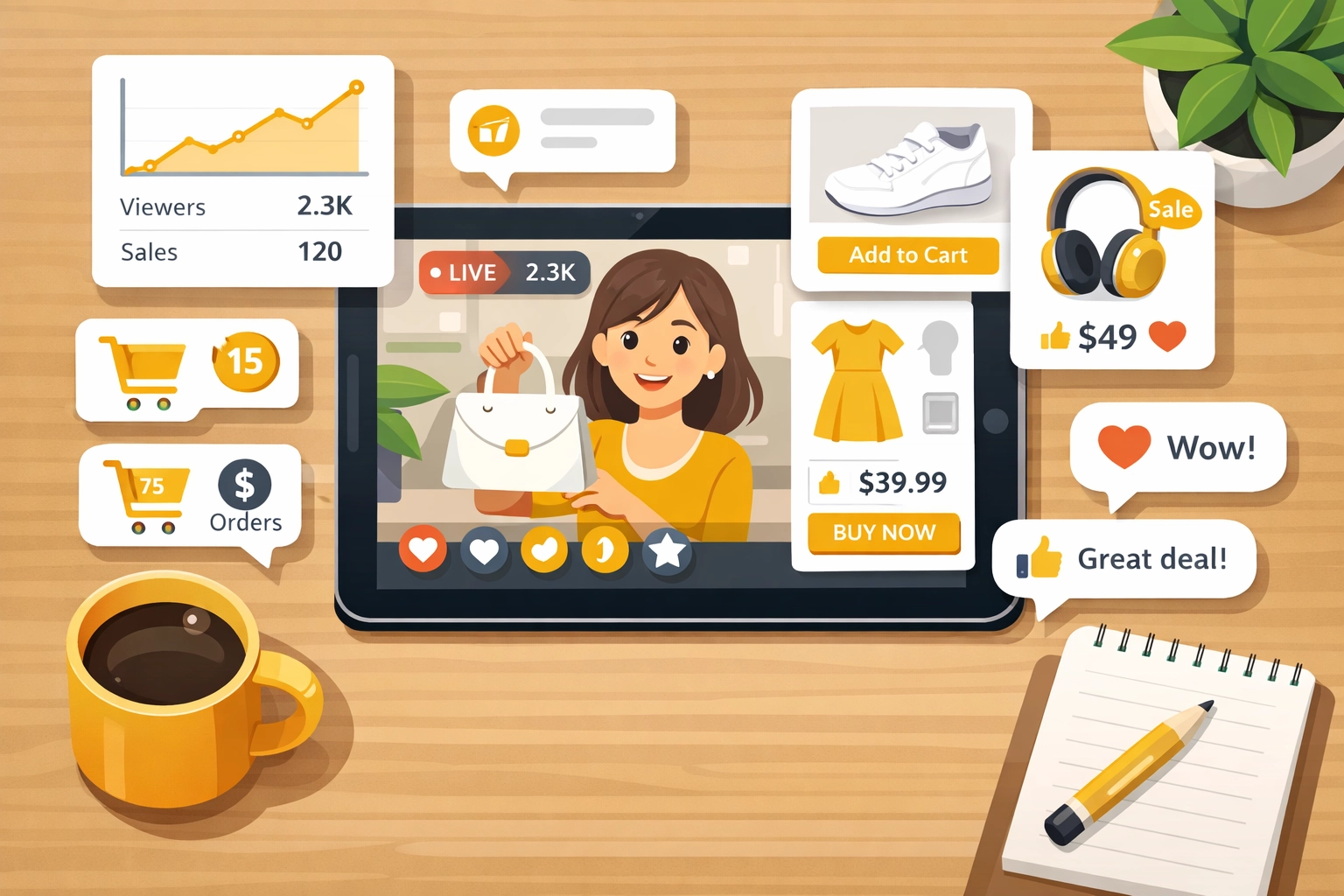
Live shopping platforms include chat and Q&A features that let viewers ask product-specific questions while you're presenting. You can address objections immediately, demonstrate features on the spot, and clarify details: all of which increase confidence and conversions.
Multi-Product Showcases
Unlike a standard webinar focused on one offer, live shopping lets you feature multiple products, bundles, or variants. This increases average order value and gives viewers more ways to engage.
Choosing the Right Platform for Your Business
Selecting a live shopping platform depends on your business model, audience, and selling strategy.
Ask yourself:
Do I want to build on my own website or leverage an existing marketplace?
How frequently do I plan to run live shopping events?
Do I need simulcasting across social media channels?
What's my average order value and product type?
Do I need advanced analytics and attribution tracking?
If you prioritize audience ownership and control, platforms like Channelize, Sprii, and Bambuser are ideal. They integrate with your website and let you own the customer relationship.
If you want immediate access to large audiences, TikTok Shop and Amazon Live provide built-in traffic but come with marketplace dependency.
For fashion and boutique brands, CommentSold's comment-based purchasing model is highly effective.
For enterprise retailers running frequent, polished events, Bambuser and Sprii offer the scalability and analytics you need.
Integrating Live Shopping Into Your Webinar Strategy
Live shopping platforms work best when integrated into a broader webinar and content strategy. Here's how to maximize results:
Promote early – Build anticipation with email campaigns, social posts, and retargeting ads before the event
Prepare your pitch – Script product demonstrations, benefits, and transitions between items
Engage actively – Respond to chat questions, acknowledge viewers by name, and create interaction
Create urgency – Offer limited-time discounts or bonuses available only during the live event
Follow up post-event – Send replays, product links, and exclusive offers to attendees who didn't purchase
Many platforms allow you to keep the stream available for on-demand viewing with shoppable links still active, extending the buying window beyond the live event.
The Future of Webinar-Based Selling
Live shopping platforms represent the evolution of webinar software. As buyers expect more interactive, immediate experiences, businesses that adapt will capture more conversions and build stronger customer relationships.
The distinction between "presenting" and "selling" is disappearing. The most effective webinars now combine education, demonstration, engagement, and checkout in a single seamless experience.
Whether you're a DTC brand, consultant, sales team, or network marketing leader, the ability to turn your presentations into revenue-generating events is no longer optional: it's the standard.
If you're evaluating Zoom alternatives for selling or engagement, it may be worth exploring interactive webinar platforms designed for conversion. Learn more about building webinars that convert.
Comments