

Why Live Shopping Platforms Will Change the Way You Run Webinars in 2026
- Rick Amico
- Jan 23
- 5 min read
If you've been running webinars on Zoom, you've probably noticed something frustrating: engagement drops off, attendees multitask through your presentation, and converting viewers into buyers requires a complicated post-webinar funnel. That's because traditional video conferencing software was never designed for selling. In 2026, a new category of live shopping platform technology is fundamentally changing how businesses, consultants, and sales teams approach webinar-based selling, and it's worth understanding why.
The shift isn't just about adding a "buy now" button. It's about rethinking the entire webinar experience from passive broadcasting to interactive, conversion-focused engagement. For sales leaders, network marketing teams, and anyone who relies on presentations to drive revenue, this evolution represents a significant opportunity.
The Problem with Traditional Webinar Software
Let's be direct: Zoom, Google Meet, and similar platforms are excellent for meetings. They're reliable, familiar, and widely adopted. But when it comes to selling through webinars, they fall short in critical ways.
No native purchase functionality. When a viewer is ready to buy during your presentation, they have to leave your webinar, find your website, navigate to checkout, and complete the purchase, often on a different device. Every step in that journey is a chance for them to abandon the sale.
Limited interactivity. Traditional webinar tools offer basic features like chat, polls, and Q&A. But they don't provide the kind of touchscreen-like, dynamic engagement that keeps modern audiences invested for 30, 60, or 90 minutes.
No tracking for team-based selling. If you're a consultant deploying webinars across a sales team, or a network marketing leader supporting a downline, Zoom offers no native way to track which presenter or smart invite link drove which conversion.
Post-webinar friction. The standard model requires follow-up emails, landing pages, and retargeting campaigns to capture sales. By the time prospects receive your follow-up, momentum has faded.

What Makes a Live Shopping Platform Different
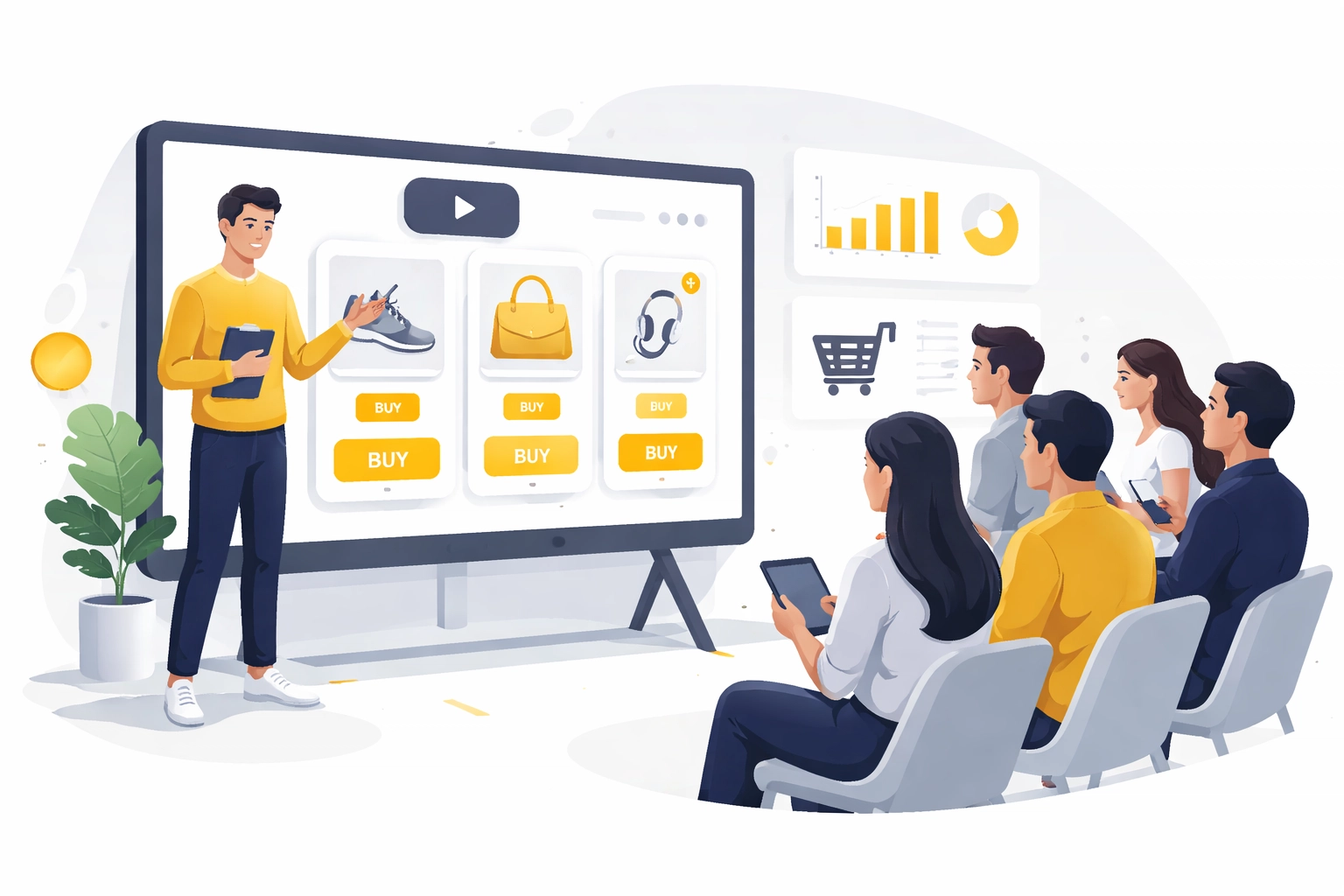
A live shopping platform integrates the purchase experience directly into the webinar itself. Instead of treating webinars as top-of-funnel lead generation, these platforms treat them as conversion events, complete with built-in shopping carts, one-click checkout, and real-time purchase notifications.
Here's what that looks like in practice:
Seamless E-Commerce Integration
Modern live shopping platforms connect natively with Shopify, WooCommerce, and other e-commerce systems. Products appear as interactive elements within your presentation. When a viewer clicks, they can add items to their cart and check out without ever leaving the stream.
This eliminates the friction that kills conversions on traditional platforms. The buying decision happens in the moment, while your prospect is engaged, informed, and emotionally connected to your offer.
Interactive Touchscreen Experience
Platforms like Pxch are designed around interactive presentation software principles. Instead of static screen sharing, presenters can guide viewers through dynamic, touch-responsive content. This keeps attention focused and makes webinars feel more like one-on-one consultations than broadcast lectures.
For sales professionals and consultants, this interactivity is a game-changer. You're not just presenting, you're collaborating with your audience in real time.
Smart Invite Links for Tracking
One of the most overlooked limitations of Zoom for team-based selling is attribution. If you're a business owner or sales leader managing multiple presenters, you need to know which team member drove which sale.
Live shopping platforms solve this with smart invite links. Each presenter, affiliate, or partner gets a unique link that tracks attendance, engagement, and conversions back to the source. This is essential for commission tracking software functionality and allows businesses to reward performance accurately.
No Downloads Required
Browser-based platforms remove the friction of asking prospects to download software before joining. This sounds minor, but it has a measurable impact on attendance rates, especially for first-time viewers who aren't familiar with your brand.
Zoom vs. Interactive Webinar Platforms: A Comparison
To clarify the differences, here's how traditional video conferencing compares to purpose-built webinar platforms designed for selling:
Feature | Zoom / Traditional Tools | Interactive Webinar Platforms |
In-stream purchasing | No | Yes |
Native e-commerce integration | No | Yes (Shopify, WooCommerce) |
Touchscreen-like interactivity | Limited | Advanced |
Smart link tracking for teams | No | Yes |
Commission/affiliate tracking | No | Built-in |
Browser-based (no download) | Partial | Yes |
Real-time purchase notifications | No | Yes |
Multilingual support | Limited | Real-time translation available |
For anyone evaluating a Zoom alternative specifically for sales webinars, this comparison highlights why general-purpose meeting software often underperforms for revenue-focused events.
Why This Matters for Sales Teams and Consultants
If you're a business owner, consultant, or sales leader who uses webinars as a client-facing platform, the shift toward interactive, shoppable webinars opens new possibilities.
Build Leverage Through Presentations
Rather than treating each webinar as a one-time event, teams can use automated webinar replays with embedded purchasing to generate sales around the clock. The initial presentation becomes an asset that continues working: without requiring live participation for every sale.
Support Your Team with Better Tools
For network marketing leaders and sales organizations with distributed teams, a live shopping platform functions as a tool businesses can offer to their downline or sales partners. Everyone benefits from professional-grade presentation capabilities, and smart tracking ensures proper attribution.
Reduce Tech Stack Complexity
Instead of stitching together Zoom, a landing page builder, an email tool, and a separate e-commerce platform, modern webinar software consolidates these functions. This reduces costs, simplifies operations, and creates a more seamless experience for both presenters and attendees.
What to Look for in a Webinar Platform for Businesses
If you're considering a switch from traditional video conferencing to a more sales-focused solution, here are the key features to evaluate:
Native shopping functionality. The platform should allow products to be displayed, selected, and purchased without leaving the webinar interface.
Tracking and attribution. Look for smart invite links, affiliate tracking, and detailed analytics that show exactly which efforts drive conversions.
Ease of use. Both presenters and attendees should be able to join without downloads or complicated setup processes.
Integration capabilities. The platform should connect with your existing e-commerce, CRM, and marketing tools.
Interactive presentation features. Beyond screen sharing, look for touchscreen-style navigation, dynamic content displays, and engagement tools that go beyond basic chat.
AI-powered features. Emerging platforms are incorporating AI for real-time translation, automated follow-ups, and intelligent audience insights. These capabilities can significantly enhance both reach and conversion rates.
The Competitive Advantage of Acting Early
The webinar space is evolving quickly. While most businesses are still running standard Zoom presentations, early adopters of interactive, commerce-enabled webinar platforms are seeing measurable improvements in engagement and conversion rates.
This isn't about chasing trends. It's about recognizing that the tools designed for meetings aren't optimized for selling: and that purpose-built alternatives now exist.
For sales teams, consultants, and network marketing organizations that rely on webinars as a core part of their business, upgrading to a platform designed for conversion is a strategic advantage.
Taking the Next Step
If you're curious about how an interactive webinar platform compares to your current setup, it's worth exploring the options available. You can learn more about Pxch here or book a demo to see how live shopping functionality, smart tracking, and interactive features work in practice.
If you're evaluating Zoom alternatives for selling or engagement, it may be worth exploring interactive webinar platforms designed for conversion.
Comments