

Why Live Shopping Platforms Will Change the Way You Sell Online in 2026
- Rick Amico
- Jan 30
- 5 min read
If you've been relying on Zoom or traditional webinar software to sell your products and services, 2026 might be the year you reconsider your approach. While platforms like Zoom work well for standard meetings and presentations, they weren't designed with selling in mind. Enter the live shopping platform: a new category of interactive webinar software that's bridging the gap between engagement and conversion in ways that traditional tools simply can't match.
The shift toward interactive, shoppable presentations isn't just a passing trend. It represents a fundamental change in how businesses connect with buyers, demonstrate products, and close sales in real time. For sales teams, consultants, and business owners looking for Zoom alternatives built for conversion, understanding this shift is essential.
What Is a Live Shopping Platform and Why Does It Matter?
A live shopping platform combines the engagement of live video with seamless e-commerce integration. Unlike standard video conferencing software, these platforms allow presenters to showcase products, answer questions in real time, and enable viewers to purchase without ever leaving the stream.
The results speak for themselves. Shoppable live videos achieve conversion rates between 9% and 30%, compared to just 2–3% for traditional e-commerce pages. That's not a marginal improvement: it's a game-changer for anyone serious about selling online.
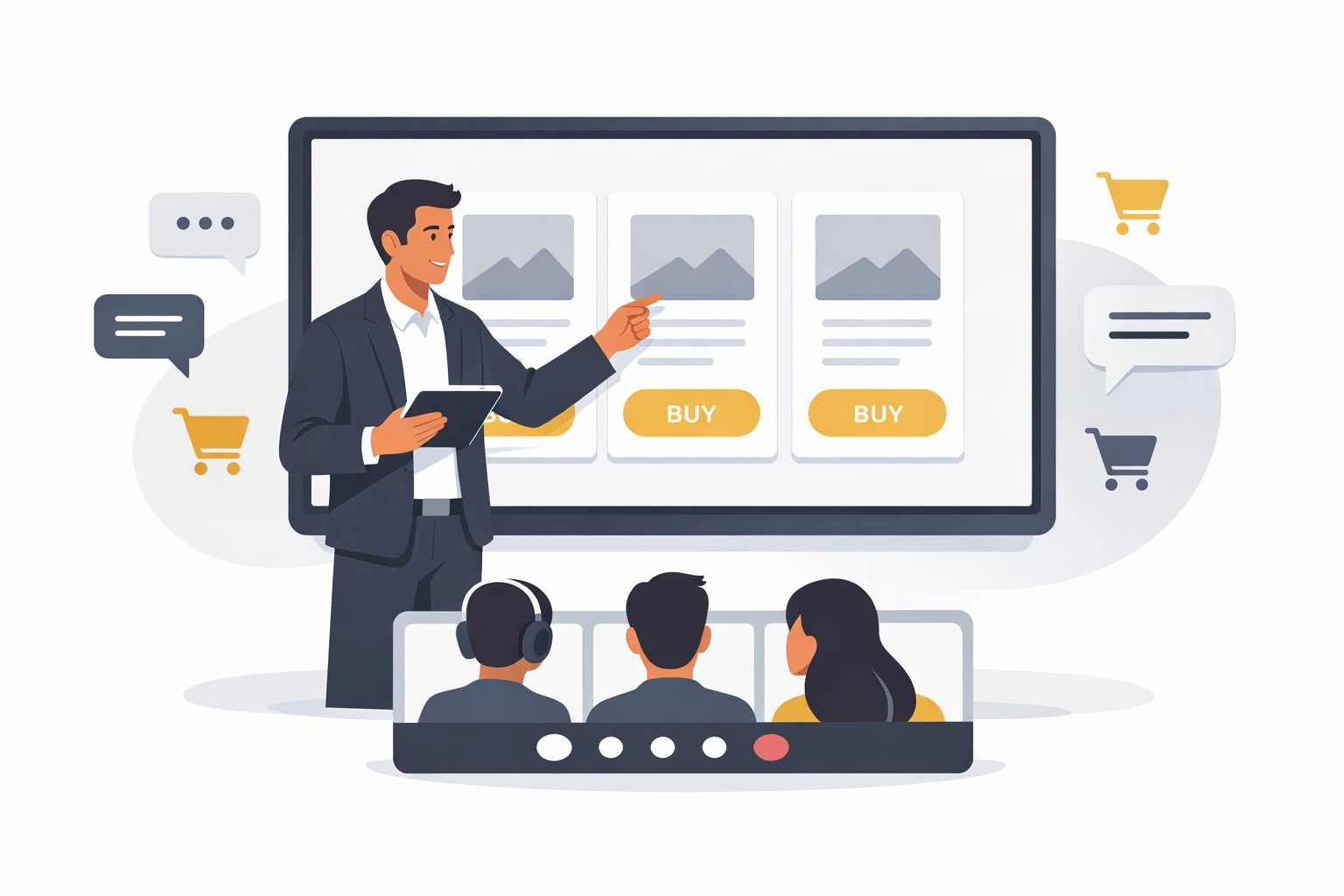
What makes this approach so effective? It removes friction from the buying journey. Viewers can watch a demonstration, ask questions via chat, and complete a purchase: all in one place. There's no need to switch tabs, search for product pages, or second-guess a decision. The immediacy of live interaction builds confidence and reduces cart abandonment.
Why Traditional Webinar Platforms Fall Short for Selling
Most webinar software was built for education, training, or corporate meetings. These tools prioritize features like screen sharing, breakout rooms, and recording capabilities. While useful, they lack the infrastructure needed for effective selling.
Consider a typical Zoom webinar. You can present slides, share your screen, and take questions through chat. But when it's time to close the sale, you're directing viewers to an external link, hoping they follow through after the call ends. That disconnect: between engagement and transaction: costs businesses sales every day.
Feature | Traditional Webinar Software | Interactive Selling Platforms |
Live video presentation | ✓ | ✓ |
Screen sharing | ✓ | ✓ |
Built-in purchasing | ✗ | ✓ |
Real-time product demos | Limited | ✓ |
Interactive touch screen | ✗ | ✓ |
No downloads required | Sometimes | ✓ |
Commission tracking | ✗ | ✓ |
Smart invite link tracking | ✗ | ✓ |
For businesses evaluating Zoom alternatives, the distinction is clear: platforms built specifically for selling outperform general-purpose meeting tools when conversion is the goal.
The Psychology Behind Live Shopping Success
Understanding why live shopping works helps explain why it's becoming the preferred method for online selling. Three psychological factors drive its effectiveness.
Real-Time Social Proof
When viewers see others asking questions, expressing interest, or making purchases during a live session, it creates powerful social proof. This isn't manufactured testimonials on a landing page: it's authentic, immediate validation that builds trust.
Reduced Decision Fatigue
Traditional e-commerce forces buyers to research, compare, and validate on their own. Live presentations compress that process. A skilled presenter addresses objections, demonstrates use cases, and answers questions before they're even asked. Viewers can make informed decisions faster.

The Scarcity of Live Events
There's something inherently valuable about a live experience. Viewers know the opportunity is time-limited, which creates natural urgency without aggressive sales tactics. This psychological principle explains why well-promoted live events often sell out featured items within minutes.
Key Features to Look for in a Selling-Focused Webinar Platform
Not all interactive webinar platforms are created equal. If you're exploring Zoom alternatives designed for conversion, look for these capabilities:
Interactive Touch Screen Experience
The best platforms go beyond basic screen sharing. Look for tools that offer an interactive touch screen experience, allowing presenters to engage with products dynamically while viewers watch. This creates a more immersive demonstration than static slides or traditional screen sharing.
No Downloads Required
Friction kills conversions. Every additional step: downloading software, creating accounts, installing plugins: gives viewers a reason to drop off. Browser-based platforms that work instantly from a smart invite link remove these barriers entirely.
Seamless E-Commerce Integration
The platform should integrate directly with your e-commerce system, allowing viewers to purchase without leaving the presentation. This isn't just convenient: it's essential for capturing buying intent at its peak.
Commission Tracking and Affiliate Tools
For team-based selling or businesses working with affiliates, built-in commission tracking software matters. You need visibility into who's driving sales, which links are converting, and how to compensate your team accurately.
AI-Powered Features
Modern platforms are incorporating artificial intelligence to enhance presentations, automate follow-ups, and provide insights on viewer engagement. These AI-powered features help presenters focus on selling while the technology handles optimization.

How Businesses Are Using Interactive Webinar Platforms
The versatility of these platforms extends across industries and business models.
Consultants and coaches use interactive webinars to demonstrate their methodology, answer prospect questions live, and enroll clients directly from the presentation.
Product-based businesses showcase items in action, address buyer concerns in real time, and close sales during the event rather than hoping for follow-through later.
Sales teams leverage these tools as a client-facing platform that elevates their pitch beyond standard video calls. The professional presentation environment positions their offering more effectively than a basic Zoom meeting.
Team leaders deploy interactive webinar platforms across their organization, providing their team with tools designed for selling rather than repurposing meeting software for sales purposes.
The Market Momentum Behind This Shift
The numbers indicate this isn't a niche trend. US livestream e-commerce sales grew nearly 50% in 2025, reaching $14.64 billion. Revenue is forecast to grow another 36% this year.
While only 12% of US shoppers have purchased through a livestream so far, another 12% plan to try it: signaling significant growth potential. Among younger demographics, adoption is even stronger. Gen Z participation jumped from 34% in 2020 to 61% by 2023.
For businesses, this represents both an opportunity and a competitive imperative. Early adopters of interactive selling platforms gain advantages in engagement, customer loyalty, and sales velocity that become harder for competitors to match over time.
Making the Transition from Traditional Webinar Software
If you're currently using Zoom or similar platforms for selling, transitioning to a purpose-built solution doesn't have to be complicated. Most interactive webinar platforms are designed for quick adoption, with no downloads required for either presenters or viewers.
The key is choosing a platform that matches your specific use case. Consider whether you need:
E-commerce integration for direct purchasing
Team collaboration features for multiple presenters
Affiliate and commission tracking for partner programs
Smart invite links for tracking and attribution
AI-powered features for automation and optimization

Platforms like Pxch are built specifically for these requirements, offering an interactive touch screen experience combined with seamless selling capabilities.
What This Means for Your Business in 2026
The evolution from traditional webinars to interactive selling platforms reflects a broader shift in buyer expectations. Audiences want engagement, authenticity, and convenience. They want to ask questions and get immediate answers. They want to buy when they're ready, not when it's convenient for your sales process.
Businesses that recognize this shift: and adopt tools designed to meet these expectations: position themselves for stronger conversions, deeper customer relationships, and sustainable growth.
The question isn't whether interactive webinar platforms will replace traditional meeting software for selling. The question is how quickly you'll make the transition.
If you're evaluating Zoom alternatives for selling or engagement, it may be worth exploring interactive webinar platforms designed for conversion. Learn more about how Pxch can transform your presentations.
Comments