Search Results
Search this site
119 results found with an empty search
- Live Shopping Platform Guide: How to Turn Every Presentation Into Sales in 2026
The way we sell online has completely transformed. Gone are the days when presentations were just about sharing information: now they're full-blown sales channels. With live shopping platform technology evolving at breakneck speed and US livestream ecommerce sales hitting $14.64 billion in 2025 (up nearly 50%), the question isn't whether to integrate shopping into your presentations, but how to do it effectively. If you're still using traditional meeting platforms that weren't built for selling, you're leaving serious revenue on the table. Let's break down exactly how to turn every presentation into a conversion machine in 2026. Why Traditional Presentation Tools Fall Short for Sales Here's the thing: most video conferencing and webinar tools were designed for meetings and information sharing, not for closing deals. They force your viewers to take multiple steps: write down product names, leave the presentation, search for your website, navigate to the right product page, and then complete checkout. That's a lot of friction, and each step is a chance to lose the sale. Modern live shopping platforms solve this by bringing the entire buying experience directly into your presentation. No tab-switching. No memory-testing. No abandoned carts because someone got distracted between your demo and their checkout. Choosing the Right Live Shopping Platform for Your Business Not all platforms are created equal. When evaluating options for 2026, you need to look beyond basic screen sharing and chat features. The platform you choose should eliminate barriers between showcasing your product and completing the purchase. Key features to prioritize: The MyPitch platform incorporates all of these elements specifically because traditional webinar tools couldn't handle the demands of modern sales presentations. Pre-Presentation Planning That Drives Sales Great live shopping events don't happen by accident. The most successful sellers start planning at least three weeks ahead. Here's your strategic timeline: Three weeks out : Lock in your date and time. Schedule when your target audience is most active: typically early evenings or weekends for consumer products, mid-week mornings for B2B. Two weeks out : Start building anticipation. Send save-the-date emails, post teasers on social media, and create FOMO around limited quantities or exclusive offers available only during the live event. One week out : Send detailed reminders with smart links that not only confirm attendance but also track interest levels and remind non-registrants what they're missing. Product selection matters : Choose 3-5 items that demonstrate well on camera. They should solve clear problems, show visible results, or have features that are easier to understand when demonstrated live rather than described in text. Make sure you have sufficient inventory. Nothing kills momentum faster than running out of stock during a hot streak. Build in buffer inventory for your bestsellers. Structuring Your Sales Presentation for Maximum Conversions The first 60 seconds determine whether viewers stay or bounce. Open with energy and immediately preview what they'll see and what exclusive offers are available during the stream. The proven presentation flow: Real-Time Engagement Tactics That Convert The difference between a presentation and a conversation is what turns viewers into buyers. When someone comments or asks a question, respond immediately. Use their name. Make them feel seen. Tactical engagement strategies: Stay natural. Scripts are fine for structure, but the best moments happen when you're authentic and responsive to what's happening in the moment. Product Tagging and Display Best Practices Strategic product tagging directly impacts clicks and purchases. Here's how to do it right: Display one product prominently at a time. When you're demonstrating Product A, that's the only product link visible. Don't clutter the screen with multiple options: it causes decision paralysis. Say the action out loud: "Tap the product link right there to see all available colors and sizes." Verbal directions + visual cues = higher click-through rates. Time your tags strategically. Pin the product link during peak interest moments: right after demonstrating a compelling feature or answering a key objection. Show pricing clearly during demonstrations. Transparency builds trust and reduces the mental barrier to clicking through. Removing Purchase Friction Every extra step between interest and purchase costs you conversions. The global livestream shopping market is projected to exceed $1 trillion by 2026 precisely because it collapses the buying journey. Friction reducers: Platforms with seamless e-commerce integration handle all of this automatically. You focus on presenting; the technology handles the transaction complexity. Follow-Up Strategy for Non-Purchasers The presentation doesn't end when you stop streaming. Within 24 hours, follow up with attendees who watched but didn't buy. Send personalized emails including: Highlights from the stream they attended Direct links to products they showed interest in (trackable via engagement analytics) A limited-time offer exclusive to attendees Answers to common questions raised during the live event Smart tracking from platforms like MyPitch shows exactly which products each viewer engaged with, allowing hyper-targeted follow-up that feels personal rather than generic. Analytics That Drive Better Results The most successful live sellers obsessively analyze their data. Modern platforms provide detailed insights into: Drop-off points : When do viewers leave? Adjust pacing or content around those moments. Click patterns : Which products generate the most interest? Lead with those in future streams. Engagement triggers : Which interactive elements drive the most participation? Conversion paths : What sequence of actions leads to purchases? Use these insights to refine every presentation. The most effective live shopping strategies evolve based on real data, not guesses. Technology Enhancements Shaping 2026 AI and immersive technologies are transforming what's possible in live shopping: AI-powered recommendations analyze viewer behavior in real-time and suggest products they're statistically most likely to buy. It's like having a personal shopper for each viewer simultaneously. Augmented reality features let viewers virtually try products through their screens: seeing how furniture looks in their space or how makeup appears on their face. This reduces uncertainty and increases purchase confidence. Automated highlights use AI to identify and clip the most engaging moments from your stream, creating shareable content that extends reach beyond the live event. The best platforms integrate these features seamlessly, enhancing rather than complicating the experience. Building Sustainable Momentum One-off presentations can drive sales, but consistent live shopping builds audiences and predictable revenue streams. Create a regular schedule: weekly or bi-weekly. Train your audience to anticipate and attend your events. Regular viewers convert at much higher rates than first-timers. Build hype across all channels: email, SMS, social media, even paid advertising. The more touchpoints you create before the event, the higher your attendance and engagement. Mix up your format: product launches, Q&A sessions, customer spotlights, behind-the-scenes content. Variety maintains interest and gives you multiple reasons to bring people back. The presenters who consistently win in live shopping treat it as a core channel, not a side experiment. They invest in quality equipment, refine their approach based on data, and build it into their overall sales strategy. The Path Forward Traditional presentation tools served us well when all we needed was to share information. But in 2026, presentations need to do more than inform: they need to convert. Live shopping platforms built specifically for sales remove the friction between interest and purchase, creating seamless experiences that turn viewers into buyers. The technology exists right now to transform every presentation into a sales channel. The question is whether you'll adapt to meet your customers where they're already shopping, or stick with tools built for a different era. If you're evaluating platforms that combine interactive presentations with integrated shopping capabilities, it may be worth exploring solutions designed specifically for conversion rather than just communication.
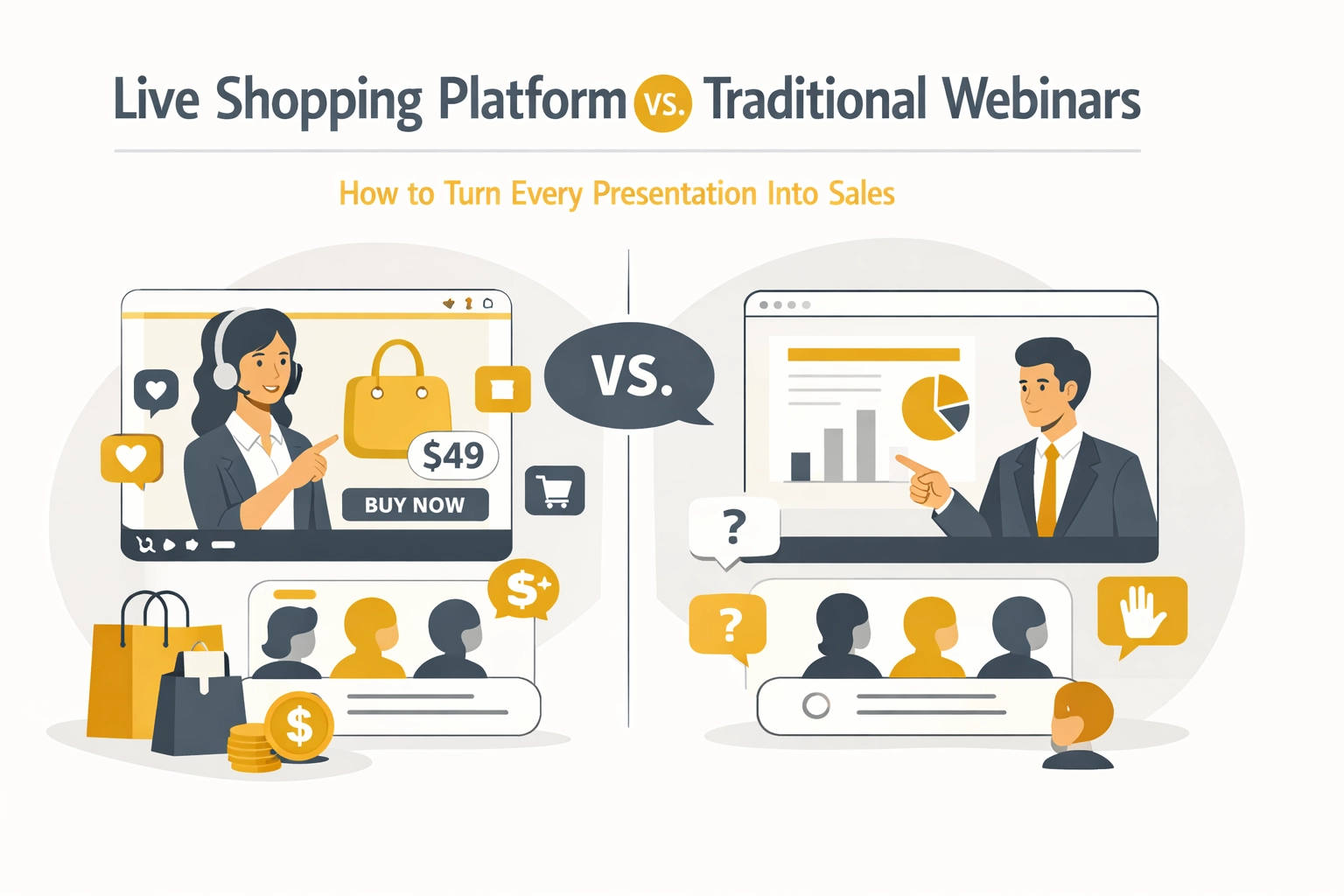
- Live Shopping Platform vs Traditional Webinars: Which Actually Sells More?
If you've been using Zoom or another traditional webinar platform to sell products or services, you've probably noticed something: people watch, they listen, maybe they ask questions, but they don't always buy. Traditional webinars were built for presentations and meetings, not for closing sales. That's where live shopping platforms come in. These tools combine the engagement of live video with instant purchase capabilities, creating a fundamentally different selling experience. But do they actually convert better? Let's look at the data. What Is a Live Shopping Platform? A live shopping platform enables real-time product demonstrations with integrated purchasing functionality. Unlike traditional webinars where viewers watch a presentation and then navigate to a separate checkout page (or forget to buy entirely), live shopping keeps everything in one place. Viewers can click, buy, and check out without leaving the stream. Think of it as the difference between a TV infomercial with a phone number versus a retail store where you can pick up the product and walk to the register. The friction is removed. The buying process happens in the moment, while interest is highest. Modern platforms like MyPitch are evolving this model even further by combining interactive webinar features with live shopping capabilities, no downloads required, smart tracking links, and seamless integration with e-commerce systems. Traditional Webinars: Built for Talking, Not Selling Traditional webinar software, whether it's Zoom, WebEx, or Google Meet, was designed for corporate meetings, training sessions, and educational presentations. These platforms excel at screen sharing and video conferencing, but they weren't built with sales conversion in mind. Here's what typically happens in a traditional webinar sales process: Present your product or service Answer questions in chat Send a follow-up email with a link Hope people remember to click and buy later The problem? Most people don't. They get distracted, lose interest, or simply forget. Traditional webinars create what marketers call "conversion friction", extra steps between interest and purchase that cause potential buyers to drop off. The Conversion Data: Live Shopping vs Traditional E-Commerce While direct comparisons between live shopping platforms and traditional webinars are still emerging, the data comparing live shopping to traditional e-commerce is striking, and highly relevant to understanding why live formats outperform static presentations. According to Coresight Research, live shopping can increase conversion rates by up to 30% compared to standard online shopping. Other industry studies report even more dramatic results, with live shopping conversion rates reaching 50-60% versus just 2.5% for traditional e-commerce. That's not a small improvement. That's a 20x difference. Why Live Shopping Platforms Convert Better Real-Time Engagement Keeps Attention Viewers spend an average of 15-30 minutes watching live shopping streams, compared to just 54 seconds on traditional e-commerce websites. In a traditional webinar, you might hold attention for the presentation, but conversion happens later, after interest has cooled. Live shopping platforms maintain engagement through the entire buying journey. Questions get answered immediately. Objections are handled in real-time. And the purchase happens while excitement is highest. Instant Purchase Reduces Drop-Off Every additional step in the buying process creates an opportunity for customers to change their minds. Traditional webinars require viewers to: Remember the product after the webinar ends Navigate to a separate website Find the right product page Go through checkout Complete the purchase Live shopping platforms eliminate most of these steps. The product is right there, clickable, purchaseable, often with one-click checkout options. When you remove friction, you increase conversions. Lower Return Rates Mean Higher Net Revenue Live shopping typically produces return rates of 10-15%, compared to 20-30% for traditional e-commerce. Why? Because real-time product demonstrations set accurate expectations. Viewers see exactly what they're getting, how it works, and whether it's right for them. In traditional webinars, you can describe and demonstrate products, but the actual purchase still happens through a standard checkout process, often without the live context that helped make the sale. What Traditional Webinars Still Do Well To be fair, traditional webinar platforms aren't useless for selling. They work well for: High-ticket services where the webinar is just the first touchpoint B2B sales with long consideration cycles Educational content where immediate purchase isn't the goal Team meetings and training sessions If you're selling consulting services, software subscriptions, or complex B2B solutions, a traditional webinar might still fit your needs. The value in these sales processes comes from relationship-building and education, not instant conversion. But if you're selling physical products, courses, coaching packages, or anything that benefits from demonstration and immediate purchase, live shopping capabilities become a significant competitive advantage. How Interactive Webinar Platforms Bridge the Gap The future isn't just live shopping or traditional webinars, it's platforms that combine the best of both. Interactive webinar software offers features that traditional meeting tools don't include: Smart Tracking Links : Know exactly who joined, what they clicked, and who made a purchase. This is especially valuable for sales teams and businesses that work with affiliates or commission-based structures. No Downloads Required : Unlike Zoom or other video conferencing software, modern interactive platforms work directly in the browser. Lower barriers to entry mean more attendees actually show up. Integrated E-Commerce : Purchase buttons, product showcases, and checkout flows built directly into the presentation experience, not as an afterthought. AI-Powered Features : Automated follow-ups, intelligent chat responses, and analytics that help you understand what's working and what isn't. Touch Screen Capabilities : For product demonstrations, the ability to interact directly with what you're showing creates a more engaging experience than simple screen sharing. Platforms like MyPitch are designed specifically for selling, not just presenting. They recognize that business owners, sales teams, and consultants need tools that drive revenue, not just host meetings. The Growth of Live Commerce Shows Where the Market Is Going US livestream e-commerce sales grew nearly 50% in 2025, reaching $14.64 billion. Global livestream sales are projected to exceed $1 trillion by 2026. These aren't small numbers or niche markets, this is mainstream adoption. Businesses are moving toward live shopping platforms because they work. The conversion rates speak for themselves. The engagement metrics are undeniable. And the technology is finally mature enough to deliver a seamless experience. Traditional webinar platforms aren't going away, but they're increasingly being used for what they were designed for: meetings, training, and corporate communication. When the goal is selling, specialized tools built for conversion make a measurable difference. Which Platform Type Is Right for Your Business? If your primary goal is revenue generation, whether you're selling products, courses, or services, ask yourself these questions: Do you need people to buy immediately? If yes, live shopping capabilities or interactive webinar features matter more than traditional meeting tools. Are you tracking affiliate or team-based sales? Standard video conferencing doesn't offer the commission tracking or smart links you need. Interactive platforms designed for sales do. Is your product visual or demonstration-heavy? Live shopping excels when viewers can see the product in action and make immediate decisions. Do you need to build long-term relationships first? If your sales cycle is measured in weeks or months, a traditional webinar approach might still work: though adding interactive elements will likely improve results. For many businesses, the answer isn't either/or. You might use traditional video conferencing software for internal meetings while using a dedicated webinar sales platform for customer-facing presentations. The key is matching the tool to the goal. Making the Switch: What to Consider If you're currently using Zoom, Google Meet, or another traditional platform for sales webinars and you're considering a live shopping platform or interactive alternative, here's what matters: Ease of Use : Can your team learn it quickly? Do attendees need to download anything? Integration : Does it connect with your existing e-commerce platform, CRM, or payment processor? Analytics : Can you track who attended, what they engaged with, and whether they purchased? Support for Teams : If you work with affiliates, consultants, or a sales team, can the platform handle tracking and attribution? Cost vs. Conversion Lift : A more expensive platform that doubles your conversion rate is actually cheaper than a free tool that converts poorly. The best time to switch is before your current platform becomes a limitation. If you're regularly hearing "I'll check it out later" or seeing high webinar attendance but low sales, that's a signal. The Bottom Line: Which Actually Sells More? Based on available data and market trends, live shopping platforms and interactive webinar software designed for selling significantly outperform traditional webinar platforms when conversion is the goal. The conversion rate differences: sometimes 10x to 20x higher: aren't marginal improvements. They're business-changing numbers. The engagement metrics show that viewers stay longer, pay more attention, and buy more often when the purchase process is integrated into the live experience. Traditional webinars still have their place for relationship-building, education, and complex sales cycles. But for businesses that need to generate revenue from presentations, live shopping capabilities and interactive features are quickly becoming the standard. If you're evaluating Zoom alternatives for selling or engagement, it may be worth exploring interactive webinar platforms designed for conversion .
- The Best Interactive Webinar Software Compared: Which Platform Actually Converts Viewers to Buyers?
If you're running sales presentations on Zoom, you've probably noticed something: webinars that generate tons of attendance don't always generate buyers. That's because Zoom: and most traditional video conferencing tools: weren't built for conversion. They were built for meetings. Interactive webinar software solves this gap by combining engagement tools with built-in sales features that turn passive viewers into active buyers. In this guide, we'll compare the top interactive webinar platforms designed specifically for selling, explain what separates conversion-focused tools from basic meeting software, and help you choose the right platform for your business. Why Traditional Webinar Platforms Fall Short for Sales Zoom is great for team calls and client check-ins. But when it comes to running a sales presentation or product demo, it lacks the features that actually drive conversions. Here's what's typically missing: No native lead capture forms during the presentation Limited CTA placement options : you can't time offers to appear at key moments Basic engagement tools like polls and Q&A that don't connect to your sales funnel No e-commerce integration for instant purchases Clunky tracking : you can't easily identify which attendees are ready to buy The result? You're hosting webinars, but you're losing momentum between the presentation and the sale. Interactive webinar software closes that gap by embedding conversion tools directly into the viewing experience. What Makes Interactive Webinar Software Different? Interactive webinar software goes beyond video and chat. It's designed to engage viewers and move them toward a buying decision: without forcing them to leave the webinar to take action. Here are the core features that separate interactive platforms from basic video conferencing tools: Built-In Lead Capture and CTAs Platforms like eWebinar let you drop contact forms, special offers, and downloadable resources directly onto your webinar timeline. Viewers can engage with these elements without pausing the presentation or opening another tab. This creates a seamless path from interest to action. Real-Time Engagement Tools That Drive Decisions Polls, Q&A, emoji reactions, and live chat aren't just for engagement: they're data. Interactive webinar platforms track how viewers respond to these features, giving you insight into buying intent. Some platforms, like WebinarJam, even let you spotlight attendees or bring them on stage, creating high-energy moments that build trust and urgency. E-Commerce and Payment Integration The best interactive webinar software lets viewers buy without leaving the webinar. Whether you're selling a course, a product, or a subscription, integrated checkout options reduce friction and increase conversions. This is especially valuable for live shopping experiences and product launches. Smart Tracking and Analytics Interactive platforms track more than just attendance. They show you which viewers clicked on your CTA, filled out a form, or stayed engaged through the entire pitch. This data helps you follow up with warm leads and refine your presentations over time. Top Interactive Webinar Platforms Compared Let's break down how the most popular interactive webinar platforms stack up when it comes to converting viewers into buyers. eWebinar: Best for Automated, Conversion-Focused Webinars eWebinar is designed for businesses that want to scale their sales presentations without going live every time. It offers over 20 interactive features, including special offers, customizable CTAs, pre-populated questions, and timed downloads that appear throughout your webinar. Key Strengths: Drag-and-drop timeline for placing offers at the right moment Lead capture forms embedded directly in the webinar Automated replay system that feels live 4.9-star rating for conversion performance Best For: Businesses running recurring sales presentations, onboarding sequences, or automated product demos. WebinarJam: Best for Live Selling and Upsells WebinarJam is built for high-energy, live presentations where you're actively selling during the event. It excels at real-time interaction: polls, handouts, student spotlighting, and the ability to sell upsells directly during the webinar. Key Strengths: Real-time engagement tools that create urgency Built-in upsell and offer features High-energy hosting capabilities Strong for education-based selling Best For: Coaches, consultants, and sales teams running live product launches or training sessions where immediate conversion is the goal. Demio: Best for Engagement-Driven Webinars Demio focuses on creating interactive, conversational webinars with features like emoji reactions, attendee mentions, and the ability to bring viewers on stage. It's strong for building connection and trust, though it offers fewer built-in sales tools compared to eWebinar. Key Strengths: Real-time chat with emojis and mentions Interactive polls and Q&A Clean, modern interface Best For: Businesses prioritizing audience engagement and relationship-building over hard selling. BigMarker: Best for Large-Scale Webinars BigMarker is a solid choice for businesses hosting large events with hundreds or thousands of attendees. It offers webinar automation, breakout rooms, and advanced analytics. Key Strengths: Scales for large audiences Built-in automation features Breakout room capability Best For: Enterprises and organizations running large-scale virtual events or multi-session conferences. What to Look for in a Conversion-Focused Webinar Platform Not all interactive webinar software is built the same. If your goal is to convert viewers into buyers, here's what to prioritize: Sales-Focused Features, Not Just Engagement Tools Polls and chat are great, but they don't directly drive sales. Look for platforms that offer: Timed CTAs and special offers Lead capture forms that appear during the presentation Native checkout or payment integration Downloadable resources that require an email opt-in No Download Required Friction kills conversions. The best interactive webinar platforms let viewers join instantly from a browser link: no software downloads, no account creation, no barriers. This is especially important for cold audiences who aren't yet familiar with your brand. Smart Invite Links and Tracking If you're running team-based sales or working with affiliates, you need a platform that can track who invited whom and which presentations are driving results. Smart invite links make it easy to attribute conversions to specific team members or campaigns. Seamless E-Commerce Integration If you're selling products, courses, or subscriptions, your webinar platform should integrate with your e-commerce stack. The best platforms let viewers buy without leaving the webinar, reducing drop-off and increasing impulse purchases. AI-Powered Features Modern interactive webinar platforms are starting to incorporate AI for personalization, automated follow-ups, and content recommendations. These features help you deliver more relevant presentations and close more deals with less manual effort. How MyPitch Fits Into the Interactive Webinar Landscape MyPitch is designed specifically for businesses that need to combine interactive presentations with live shopping and e-commerce integration. Unlike traditional webinar platforms, MyPitch offers an interactive touch screen experience that lets viewers engage with products, content, and CTAs in real time: without downloads or complicated setup. Here's what sets MyPitch apart: Live shopping integration : Viewers can browse and purchase products without leaving the presentation Smart invite links : Track which team members, affiliates, or partners are driving conversions No downloads needed : Attendees join instantly from a browser link AI-powered features : Personalized recommendations and automated follow-ups Built for selling : Designed from the ground up for businesses that use webinars to drive revenue If you're evaluating Zoom alternatives for team-based selling, client presentations, or product demos, MyPitch offers a more conversion-focused alternative that doesn't sacrifice ease of use. The Bottom Line: Choose Based on Your Sales Process The best interactive webinar software depends on how you sell: If you're running automated, evergreen sales presentations , eWebinar offers the most robust conversion toolkit. If you're hosting high-energy live events where you sell in real time, WebinarJam is your best bet. If you're focused on building trust and connection before the ask, Demio excels at engagement. If you need to combine product demos with instant purchasing , MyPitch delivers the most seamless live shopping experience. The key is to match the platform to your process. Traditional video conferencing tools like Zoom work for meetings, but they're not optimized for conversion. Interactive webinar software bridges that gap by giving you the tools to engage, educate, and convert: all in one place. If you're evaluating Zoom alternatives for selling or engagement, it may be worth exploring interactive webinar platforms designed for conversion.
- Zoom Alternatives for Sales Teams: 7 Interactive Platforms That Actually Convert Leads into Customers
If you are a sales leader, you have probably run dozens (maybe hundreds) of Zoom calls. Zoom is great for internal meetings and quick check-ins, but when it comes to actually selling, converting prospects, closing deals, or running product demos that drive revenue, it starts to feel like you are trying to close a deal with one hand tied behind your back. The truth is, Zoom was built for meetings, not for selling. And while it works fine for collaboration, it lacks the interactive features, engagement tools, and conversion mechanisms that modern sales teams need. That is why more businesses are exploring Zoom alternatives designed specifically for sales presentations, webinars, and live product demonstrations. In this post, we will walk through seven interactive platforms that help sales teams convert leads into customers, not just host calls. Why Zoom Falls Short for Sales Teams Zoom is a solid video conferencing tool, but it was never built with sales conversion in mind. Here is what is missing: No built-in conversion tools. You cannot take payments, showcase clickable products, or let prospects purchase without leaving the call. Everything happens outside the platform, which adds friction and kills momentum. Limited engagement features. Sure, you have polls and reactions, but there is no interactive touchscreen, no live product browsing, and no way to make the experience feel immersive or dynamic. Not optimized for selling. Zoom is designed for collaboration, not persuasion. Sales teams need platforms that guide prospects toward a decision: not just facilitate a conversation. If your team relies on webinars, product demos, or live presentations to drive revenue, you need more than a meeting tool. You need a webinar sales platform built for conversion. What to Look for in Zoom Alternatives for Sales Not all video platforms are created equal. When evaluating Zoom alternatives, here is what actually matters for sales teams: Interactive engagement tools. Can prospects interact with your presentation in real time? Can they browse products, ask questions, or explore content on their own? Built-in conversion features. Does the platform let you collect payments, book appointments, or capture leads without sending people to another page? Trackable performance. Can you see who attended, how long they stayed, what they clicked, and whether they converted? Ease of use. If your platform requires a training manual, your sales team will not use it. The best tools are intuitive and ready to go in minutes. Scalability. Whether you are running a one-on-one demo or a 500-person webinar, the platform should handle it without lag or complexity. Now, let us look at seven platforms that check these boxes. The 7 Best Zoom Alternatives for Sales Teams 1. MyPxch MyPxch is an interactive webinar and live shopping platform built specifically for sales teams, consultants, and businesses that sell through presentations. Unlike Zoom, MyPxch turns your webinar into a conversion engine. What makes it different: Interactive touchscreen technology. Viewers can browse products, click links, and explore your offerings in real time: without interrupting the presentation. Live shopping integration. Let prospects buy directly from the webinar. No redirects. No checkout friction. Built for team-based selling. Perfect for network marketing teams, consultants, and sales leaders who need a platform their entire organization can use. Zero setup required. Launch a live presentation in minutes. No complicated configurations or software downloads. Best for: Sales teams, network marketing leaders, consultants, and anyone who wants to turn presentations into revenue. 2. Aircall Aircall is a cloud-based phone system designed for teams that rely on voice-based communication. It is a strong option for sales teams that prioritize calls over video. Key features: Local, toll-free, and international numbers 100+ integrations including CRM tools AI-generated call summaries through MeetGeek integration Best for: Sales teams focused on outbound calling and voice communication. Limitation: No video presentation or interactive webinar capabilities. It is a phone system, not a conversion platform. 3. MeetGeek MeetGeek is an AI meeting assistant that automates note-taking, transcription, and follow-up. It integrates with Slack, Notion, Google Drive, and thousands of other tools. Key features: AI-generated meeting summaries Automatic transcription and recording Integration with 7,000+ apps Best for: Teams that need better documentation and follow-up workflows. Limitation: Great for productivity, but it does not replace a selling platform. You still need Zoom or another tool to run the actual call. 4. Microsoft Teams Microsoft Teams is a collaboration platform with deep integration into the Microsoft 365 ecosystem. If your team already lives in Outlook, Word, and Excel, Teams makes sense. Key features: Built-in collaboration tools (document sharing, real-time editing) Calendar integration with Outlook Screen sharing and recording Best for: Enterprise teams already using Microsoft 365. Limitation: Like Zoom, it is built for meetings: not selling. No interactive engagement or conversion tools. 5. Webex Webex by Cisco is a feature-rich video conferencing platform with real-time translation, automatic transcriptions, and background noise removal. Key features: Real-time translation in multiple languages AI-powered transcription Integrates with 100+ third-party apps Best for: Global teams that need multilingual support. Limitation: Still a meeting tool. It does not have the interactive or conversion features sales teams need. 6. GoToMeeting GoToMeeting has been around for years and offers solid video conferencing with document collaboration and screen sharing. Key features: Real-time recording Document sharing and collaboration Mouse and keyboard transfer for remote demos Best for: Teams that need reliable, straightforward video conferencing. Limitation: No interactive engagement or live shopping features. You are still running a passive presentation. 7. Google Meet Google Meet is a free, accessible video conferencing tool that integrates with Google Workspace. It is simple, reliable, and easy to use. Key features: Free for Google account holders Calendar integration with Google Calendar Screen sharing and recording (with paid plans) Best for: Small teams or solopreneurs on a budget. Limitation: Extremely limited engagement features. No conversion tools, no interactivity, no sales optimization. Zoom vs. Interactive Webinar Platforms: A Quick Comparison Feature Zoom MyPxch Aircall Microsoft Teams Interactive touchscreen ❌ ✅ ❌ ❌ Live shopping integration ❌ ✅ ❌ ❌ Built-in payment processing ❌ ✅ ❌ ❌ Team-based selling tools ❌ ✅ ❌ Limited No setup required Limited ✅ ❌ ❌ Sales-focused design ❌ ✅ Partial ❌ The difference is clear: Zoom and most alternatives are designed for meetings. Interactive platforms like MyPxch are designed for selling. How to Choose the Right Platform for Your Sales Team Choosing the right Zoom alternative depends on how your team sells. If you run live product demos or webinars, you need a platform with interactive engagement and conversion tools. MyPxch is built for this. If you rely on outbound calling, Aircall is a strong choice for voice-based selling. If you need AI-powered productivity, MeetGeek can streamline your follow-up workflows. If you are locked into Microsoft or Google, Teams or Meet might make sense: but they will not replace a true selling platform. The key question is this: Do you want a tool that helps you meet, or a tool that helps you sell? Why Sales Teams Are Moving Beyond Zoom The shift away from Zoom is not about video quality or reliability. It is about conversion. Sales teams are realizing that hosting a great call is not the same as closing a deal. You need interactivity. You need engagement. You need a platform that removes friction between the presentation and the purchase. That is why platforms like MyPxch are gaining traction. They are not just video tools: they are conversion engines designed to turn viewers into buyers. Final Thoughts Zoom is not going anywhere. It will always be a reliable tool for meetings, internal collaboration, and quick check-ins. But if your team sells through webinars, product demos, or live presentations, you need a platform built for that purpose. Whether you choose an interactive platform like MyPxch, a voice-focused tool like Aircall, or an AI assistant like MeetGeek, the goal is the same: equip your team with the tools they need to convert leads into customers: not just host calls. If you are evaluating Zoom alternatives for selling or engagement, it may be worth exploring interactive webinar platforms designed for conversion.
- Live Shopping Platform 101: A Beginner's Guide to Turning Webinars Into Revenue
If you've been running webinars on Zoom or traditional meeting platforms, you've probably noticed something: they're great for talking, but terrible for selling. You finish your presentation, share a link in the chat, and hope people remember to click it later. Most don't. That's because platforms like Zoom weren't built for commerce: they were built for meetings. That's where a live shopping platform changes everything. These tools combine the engagement of live video with the conversion power of integrated e-commerce, letting viewers buy the moment they're interested, not three days later when they've forgotten why they cared. What Exactly Is a Live Shopping Platform? A live shopping platform merges live video streaming with real-time purchasing capabilities. Instead of just watching a presentation, your audience can click, buy, and checkout without ever leaving the video experience. Think of it as the digital version of a Home Shopping Network broadcast: but interactive, trackable, and hosted by you. Traditional webinar software focuses on screen sharing and Q&A. Live shopping platforms add product showcases, buy buttons, cart integration, and instant checkout: all synchronized with your live presentation. The result? You're not just informing your audience; you're giving them a frictionless path to purchase while their interest is at its peak. Unlike standard video conferencing tools, these platforms are designed specifically for revenue generation. They understand that timing matters in sales, and that every extra click between "I want this" and "I bought this" is a chance for your prospect to change their mind. Why Traditional Webinar Platforms Fall Short for Selling Here's the problem with using Zoom or similar tools for sales presentations: they create unnecessary friction. You demo your product, build excitement, answer objections: and then you have to interrupt the flow to paste a link in chat. Participants have to leave the webinar, navigate to a new page, remember what they wanted, and complete checkout on their own. That's at least four decision points where you can lose the sale. Shoppable video experiences eliminate this friction entirely. The buy button lives right next to your video feed. Product details appear as you discuss them. Checkout happens in a sidebar or overlay, so viewers never lose their place. This isn't just convenient: it's conversion optimization at the platform level. For sales teams, consultants, and anyone presenting products to a live audience, this distinction matters. You're not building an audience for later. You're capturing revenue now, while attention and interest are highest. How Live Shopping Platforms Actually Drive Revenue So what makes these platforms convert better than sending a follow-up email with a link? It comes down to psychology and mechanics working together. Real-Time Urgency and FOMO When you announce a limited-time discount that expires at the end of the broadcast, viewers can act immediately. They see a countdown timer. They see other participants making purchases (if you enable social proof notifications). That creates urgency: and urgency drives decisions. Research shows that roughly 40% of e-commerce purchases are impulse buys. Live shopping platforms are built to capitalize on that impulse before it fades. Traditional webinar tools ask people to remember their impulse for later, which almost never works. Interactive Engagement That Builds Trust Live shopping isn't just about broadcasting. It's about conversation. Viewers ask questions in chat, you answer in real time, and they buy based on that personalized interaction. This replicates the trust-building that happens in physical retail, where a knowledgeable salesperson can address specific concerns on the spot. This two-way interaction is especially valuable for team-based selling and presentations . When you're presenting to a network or group, the ability to field questions live: and let participants see those Q&As: builds collective confidence in the product. Seamless Transaction Experience The best live shopping platforms integrate directly with payment processors and inventory systems. That means when someone clicks "buy," they're not redirected to a clunky checkout page from 2012. They complete payment in a smooth, modern interface that matches your brand: often without leaving the video screen at all. For businesses that rely on repeat sales or subscription models, this seamless experience isn't just about closing one sale. It's about creating a buying experience so effortless that customers come back for the next presentation, and the one after that. Must-Have Features in a Live Shopping Platform Not all platforms are created equal. If you're evaluating options, here's what actually matters: Integrated Product Showcases : You should be able to display products, descriptions, and pricing alongside your video without relying on screen sharing or external links. The product catalog should be native to the platform. One-Click Checkout : The fewer steps between interest and purchase, the better. Look for platforms that support guest checkout, saved payment methods, and mobile optimization. Interactive Touch Screen Experience : For premium platforms, touch-enabled interfaces let you highlight products, draw on-screen, and navigate between content seamlessly: especially valuable when presenting from a tablet or touch-enabled device. Smart Invite Links and Tracking : If you're working with a sales team or offering this platform as a client-facing tool, you need to know who referred whom. Smart invite tracking means each team member gets a unique link, and all sign-ups and purchases are attributed correctly. This is critical for commission tracking and understanding which presenters drive the most revenue. No Downloads Required : Browser-based platforms have a massive advantage. If attendees need to download software before joining, you've already lost 30% of them. The best tools work instantly in any browser: on desktop, tablet, or mobile. AI-Powered Features : Modern platforms use AI to generate product descriptions, suggest upsells during the presentation, and even analyze which moments in your webinar drove the most engagement. This data helps you refine your pitch over time. Choosing the Right Platform for Your Business Your choice depends on where you're starting and what you're selling. If you already have an audience on Instagram or TikTok, native live shopping features on those platforms are an easy entry point. But they come with limitations: you don't own the audience data, you're subject to platform algorithms, and customization is minimal. If you're a business owner, consultant, or sales leader building a repeatable sales system, a dedicated live shopping platform gives you far more control. You own the experience, the customer data, and the follow-up relationship. You can customize branding, integrate with your existing CRM or affiliate tracking software, and scale without platform restrictions. For teams evaluating tools they can deploy across multiple presenters: or even offer as part of a consulting service: platforms with commission tracking and white-label options become essential. You're not just using the tool; you're building a system others can replicate. Getting Started: Your First Live Shopping Webinar Here's a simple framework to launch your first live shopping webinar without overcomplicating it: Step 1: Choose Your Products and Offer Start with 2-3 hero products. Don't try to showcase your entire catalog in your first session. Pick items with clear value propositions and strong margins. Create a time-limited offer exclusive to the live audience: 15% off, a bonus bundle, or early access to something new. Step 2: Set Up Your Platform Choose a platform that doesn't require participants to download anything. Test the checkout flow yourself before going live. Make sure your payment processor is connected and your inventory is synced (if applicable). Step 3: Plan Your Content Flow Structure your webinar like a story, not a product list. Introduce the problem, show how your product solves it, demonstrate key features, address objections, and close with your exclusive offer. Keep it tight: 30 to 45 minutes is the sweet spot for most audiences. Step 4: Drive Registration and Attendance Use email, social media, and SMS to promote your session. Consider offering a small incentive for early registration (bonus content, VIP Q&A time). Send reminders 24 hours, 1 hour, and 15 minutes before the webinar starts. Step 5: Go Live and Engage Start on time. Acknowledge participants by name as they join. Encourage questions throughout: not just at the end. Use polls or quick reaction features to keep energy high. When you present your offer, make the buying process as visible and simple as possible. Step 6: Follow Up Strategically After the session, send a replay link with a shorter urgency window: maybe 48 hours to claim the same offer. Use platform analytics to see who attended but didn't buy, then craft personalized follow-up messages based on their engagement level. Why Interactive Webinar Platforms Outperform Static Tools The difference between traditional webinar software and a live shopping platform comes down to intent. Zoom, Google Meet, and similar tools were designed for internal communication. They're built for screen sharing, not selling. A platform designed for commerce understands that your goal isn't just to present: it's to convert. That means every feature is optimized for reducing friction, building urgency, and making it ridiculously easy to buy. For businesses and sales professionals, that design difference translates directly to revenue. You're not adding a sales process on top of a meeting tool. You're using a tool where the sales process is the foundation. And if you're building a team-based sales system: whether you're training consultants, supporting a downline, or offering this technology as part of a client service: that foundation matters even more. You need a tool that's built for scale, tracking, and seamless client-facing presentations, not video calls that happen to have a chat box. The Bottom Line Traditional webinars and live shopping platforms serve different purposes. If you're hosting internal team meetings or educational sessions with no sales component, Zoom is perfectly fine. But if your goal is to turn presentations into revenue: whether you're selling physical products, digital courses, consulting packages, or subscription services: you need a platform built for that outcome. Live shopping platforms remove the gap between interest and purchase. They integrate selling directly into the viewing experience, so you capture revenue in the moment, not someday later when your prospect is distracted by seventeen other priorities. For anyone serious about converting live presentations into consistent income, it's not a question of whether to upgrade: it's a question of how soon. If you're evaluating Zoom alternatives for selling or engagement, it may be worth exploring interactive webinar platforms designed for conversion .
- Live Shopping Platform Secrets Revealed: How to Turn Every Webinar Into a Shoppable Experience
If you're using Zoom for webinars, you already know the biggest limitation: it's built for meetings, not selling. While Zoom excels at screen sharing and video conferencing, it lacks the interactive features that turn presentations into revenue-generating experiences. Today's business owners, network marketing teams, and sales consultants need more than passive webinars: they need live shopping platform capabilities that allow attendees to buy, engage, and interact without leaving the presentation. The good news? Modern webinar software is evolving beyond the traditional meeting format. Interactive presentation software now combines the best of video conferencing with real-time commerce features, creating true shoppable video experiences that convert viewers into customers instantly. What Makes a Webinar "Shoppable"? A shoppable webinar isn't just a presentation with a link to your store. It's an integrated experience where products, services, or offers are embedded directly into the presentation interface. Attendees can browse, select, and purchase without being redirected to another tab or losing their place in your content. Traditional webinar platforms like Zoom, Webex, and Google Meet were designed for collaboration, not conversion. They lack: In-stream product showcasing that keeps attention on your offer Real-time checkout capabilities that eliminate friction Interactive touch screen experiences that engage mobile and tablet users Commission tracking software for team-based selling environments Smart invite links that track who referred each attendee The result? Most webinars end with a verbal pitch, a chat link, and hope that attendees remember to visit your site later. Spoiler: most won't. The Live Shopping Platform Revolution in Webinars Live stream shopping isn't just for influencers on TikTok anymore. Business owners are discovering that the same principles driving social commerce platforms can be applied to professional webinars: with far better targeting and conversion rates. A true live shopping platform for webinars combines: Integrated Product Catalogs : Display your offers, packages, or products directly within the webinar interface. Attendees see pricing, descriptions, and purchase options without leaving the stream. One-Click Checkout : The biggest killer of webinar sales is asking attendees to "click the link in the chat." Every redirect loses 40-60% of potential buyers. Shoppable webinars remove that friction entirely with in-app purchasing. Real-Time Engagement Tools : Interactive polls, Q&A features, and reaction buttons keep attendees engaged: and engagement directly correlates with purchase intent. No Downloads Required : Unlike traditional webinar software that requires desktop apps, modern interactive webinar platforms run entirely in-browser. This means lower barriers to entry and higher attendance rates. Seamless E-Commerce Integration : Connect your existing Shopify, WooCommerce, or payment processor without complex APIs or developer work. Why Zoom Alternatives Matter for Selling Let's be clear: Zoom is excellent for internal meetings, team calls, and collaborative work sessions. But if your goal is to sell products, enroll clients, or convert leads, you're using the wrong tool. Here's a direct comparison: Feature Zoom Interactive Webinar Platform Screen sharing ✓ ✓ Video conferencing ✓ ✓ Product showcasing ✗ ✓ In-stream checkout ✗ ✓ Commission tracking ✗ ✓ Interactive touchscreen ✗ ✓ Affiliate link tracking ✗ ✓ Mobile-optimized buying ✗ ✓ Network marketing leaders, consultants, and sales teams using Zoom for presentations quickly hit a ceiling. They can demonstrate products and explain offers, but the actual transaction happens elsewhere: if it happens at all. Building Your Shoppable Webinar Strategy Turning your webinars into conversion machines requires more than just switching platforms. Here's how to structure your shoppable webinar experience: 1. Pre-Webinar Setup Use smart invite links that track referral sources automatically. If you're working with a team or downline, this becomes critical for accurate commission tracking software. Each team member gets a unique tracking link, and the platform automatically attributes registrations and sales to the right person. This eliminates spreadsheet management and creates transparency across your entire sales organization. 2. Opening Hook (First 5 Minutes) Your opening should acknowledge the interactive nature of the experience: "You'll notice this isn't your typical webinar. You can interact with what I'm showing you, ask questions in real-time, and if something resonates, you can take action immediately without leaving this screen." This sets expectations and primes attendees to engage with the shoppable features you'll introduce. 3. Product Demonstration with Live Interaction Instead of just showing slides or sharing your screen, use interactive presentation software that lets attendees touch, explore, and interact with what you're presenting. If you're demonstrating a physical product, allow 360-degree views. If you're explaining a service package, let them explore different tiers with a tap. The key difference between traditional webinar software and shoppable platforms is this interactivity. Passive viewers become active participants. 4. Strategic Product Placement Don't wait until the end to introduce your offer. Modern live shopping platform strategies involve multiple touchpoints: Early positioning (10-15 minutes in): "Here's what we're going to cover, and I'll show you exactly how to implement this through [your product/service]." Mid-webinar showcase (30-40 minutes in): Detailed demonstration with the product catalog visible on-screen. Closing offer (50-55 minutes in): Limited-time incentive with one-click purchase option. Each mention includes a visible, clickable product card that stays accessible throughout the presentation. 5. Post-Webinar Automation The webinar doesn't end when you stop talking. Your shoppable video remains accessible as an on-demand asset. Late registrants, no-shows, and anyone who didn't purchase live can still access the interactive experience and buy at their convenience. This extends your conversion window from 60 minutes to weeks or months, dramatically increasing ROI per webinar produced. Features That Separate Meetings from Selling Webinars When evaluating Zoom alternatives for your business, focus on these conversion-specific features: AI-Powered Features : Smart platforms now include AI-driven product recommendations based on viewer behavior, automated follow-up sequencing, and predictive analytics that tell you which attendees are most likely to buy. Affiliate Marketing Tools : If you're building a team-based business model or working with partners, built-in affiliate tracking eliminates the need for third-party software. Every sale is automatically attributed to the correct referrer, and commissions are calculated in real-time. Multi-Device Optimization : Your audience isn't just on desktops anymore. Interactive webinar software must deliver the same shoppable experience on mobile, tablet, and desktop without degradation in functionality. Seamless Integration : The best platforms connect with your existing tech stack: CRM, email marketing, payment processors, and e-commerce platforms: without requiring custom development work. Real-World Applications Beyond Retail While live stream shopping started in the retail space, the shoppable webinar model works across industries: Coaching and Consulting : Present your framework, demonstrate results, and allow immediate enrollment in your program: all within the webinar interface. Software and SaaS : Demo your platform while offering tiered subscription options that attendees can select and purchase without leaving the presentation. Professional Services : Showcase packages, testimonials, and case studies with integrated booking and payment options. Network Marketing Teams : Equip your entire organization with a client-facing platform that handles presentations, transactions, and commission tracking automatically. Team members can share their unique link, and the platform manages everything from registration to payout calculations. Course Creators : Traditional Kajabi alternatives and Thinkific alternatives focus on course hosting, but they lack live selling capabilities. A webinar platform for businesses that includes shoppable features lets you sell courses during live launches while maintaining the same automation post-launch. The Technical Setup (Easier Than You Think) One concern about switching from familiar tools like Zoom or Google Meet is the learning curve. Modern interactive webinar platforms have eliminated this barrier: No software installation : Everything runs in-browser Plug-and-play integrations : Connect your payment processor in minutes Templates for common use cases : Start with pre-built webinar formats and customize from there Built-in training : Most platforms include onboarding resources specifically for sales teams You're not abandoning the familiar webinar format: you're enhancing it with features designed specifically for conversion. Measuring Success Beyond Attendance Traditional online meeting software measures success by attendance rates and duration. Shoppable webinars require different metrics: Conversion rate : Percentage of attendees who make a purchase Average order value : What each buyer spends during the webinar Engagement score : How actively attendees interact with products and features Attribution data : Which team members or affiliates are driving the most valuable traffic Post-webinar conversion : Sales from replay views and follow-up sequences These metrics tell you not just who showed up, but who took action: and what actions led to the highest ROI. The Future of Webinar Selling The gap between traditional video conferencing software and true selling platforms will only widen. As AI-powered features become more sophisticated and consumer expectations for seamless digital experiences increase, the tools we use for business presentations must evolve. The businesses that thrive won't be the ones with the most webinars: they'll be the ones with the most effective webinars. That effectiveness increasingly depends on removing friction from the buying process and creating interactive, engaging experiences that convert attention into revenue. If you're evaluating Zoom alternatives for selling or engagement, it may be worth exploring interactive webinar platforms designed for conversion.
- Live Shopping Platform vs. Traditional Webinars: Which Converts Better for Your Business?
If you've been running sales presentations on Zoom or other traditional webinar platforms, you've probably noticed something: people watch, nod along, and... leave without buying. The conversion rates can be frustrating, especially when you're selling physical products or demonstrating something visual. That's where the conversation about live shopping platforms versus traditional webinars gets interesting, and why understanding the difference could completely change your sales results. Let's cut through the confusion and figure out which format actually converts better for your specific business model. What's the Real Difference Between Live Shopping and Webinars? Before we dive into conversion rates, let's get clear on what we're comparing. Traditional webinars are presentation-focused. Think PowerPoint slides, screen sharing, and a talking head in the corner. They're designed for education, training, or lead generation. Zoom, WebEx, and Google Meet all fall into this category, they're built for meetings and information delivery, not necessarily selling. Live shopping platforms are interaction-focused. They're built around product demonstrations with real-time engagement features like on-screen product showcases, instant purchasing, live chat, and urgency-driven elements like countdown timers. These platforms blend entertainment with commerce, think QVC meets Instagram Live. The key difference? Intent and infrastructure. Traditional webinars were designed for communication. Live shopping platforms were designed for conversion. The Conversion Rate Reality Check Here's where things get interesting, and where data starts telling a very different story depending on what you're selling. Live Shopping Platform Performance Live shopping platforms report conversion rates between 9-30% across most product categories. In high-performing sectors like fashion and beauty, some events hit conversion rates as high as 70% during peak moments. Even standard broadcast-style live shopping typically converts at 5-15% , which massively outperforms traditional e-commerce's baseline of 2-3%. Why such high numbers? Live shopping creates urgency. Limited-time offers, visible inventory counts, real-time Q&A, and the social proof of seeing others purchase, all of these elements drive immediate action. When Tommy Hilfiger sold 1,300 hoodies in two minutes during a livestream, it wasn't magic. It was psychology meeting the right technology. Traditional Webinar Performance Traditional webinars tell a more nuanced story. Their conversion rates swing wildly based on audience type: Warm audiences (people already familiar with your brand): 20-30%+ conversion rates Cold traffic (new prospects): 10-15% for well-executed presentations Automated webinars : 2-5% conversion rates B2B lead generation webinars : 73% attendance-to-lead conversion (though this measures qualified leads, not direct sales) Notice the pattern? Webinars perform best when they're educating people through a decision process, not when they're trying to get instant purchases from strangers. So Which One Should You Actually Use? The answer isn't one-size-fits-all. It depends entirely on what you're selling and who you're selling to. Choose Live Shopping Platforms If You're Selling: Physical products (especially apparel, beauty, home goods) Visually-driven items that benefit from demonstrations Lower to mid-ticket products ($20-$300) Impulse-friendly purchases Products where urgency and scarcity drive action The live shopping format excels when you need conversion velocity. Show the product, create the moment, close the deal, all within minutes. Choose Traditional Webinars If You're Selling: High-ticket services or coaching programs Complex B2B solutions that require explanation Educational courses or membership programs Anything that requires trust-building before purchase Products with longer sales cycles Webinars work when your buyers need to be walked through logic, see proof, and understand value before they commit. The Third Option: Interactive Webinar Platforms Built for Selling Here's where the conversation gets even more interesting. What if you could combine the best of both worlds? Traditional webinar platforms like Zoom weren't built with conversion in mind. You can share your screen, talk, and maybe show some slides, but the experience is passive. There's no touch interaction, no seamless product integration, and tracking who actually invited whom to the session? Forget about it. This is exactly why newer interactive presentation platforms are gaining ground. These aren't pure "live shopping" tools, and they're not old-school webinars either. They're built specifically for businesses that need to sell through presentations , whether that's physical products, services, or courses. MyPxch , for example, bridges this gap by offering an interactive touchscreen experience with live shopping integration, all without requiring downloads or complicated setups. You get the engagement of a live shopping experience with the structure and professionalism of a webinar. Plus, features like smart invite links for tracking mean you can see exactly which team members or affiliates are driving the most engagement, critical for businesses using team-based selling models. What Makes Interactive Webinar Platforms Convert Better The magic isn't just in calling something "interactive." It's in the specific features that reduce friction and increase engagement: No Download Barriers : Every step between interest and attendance kills conversion. Platforms that run in-browser without downloads see significantly higher show-up rates. True Interactivity : Touchscreen experiences where attendees can tap, explore, and interact with what you're presenting keep attention high. Passive watching leads to passive results. Seamless E-commerce Integration : If someone has to leave your presentation to buy, you've already lost them. Direct purchasing within the experience eliminates that friction entirely. Smart Tracking : Knowing who invited whom isn't just nice, it's essential if you're running any kind of affiliate model, network marketing structure, or sales team. Traditional platforms like Zoom simply don't track this. AI-Powered Features : From automated follow-ups to intelligent engagement prompts, AI helps you convert more of your audience without adding manual work. The Real Comparison: Engagement vs. Conversion Here's a truth bomb: engagement doesn't always equal conversion, but conversion almost always requires engagement. Live shopping platforms maximize engagement through urgency, social proof, and immediate gratification. Traditional webinars maximize understanding through education and relationship-building. The problem is that most businesses need both . You need people to understand your value (webinar strength) and you need them to take action immediately (live shopping strength). That's why the future isn't choosing between the two, it's using platforms that blend both approaches. Making Your Decision: A Framework Ask yourself these four questions: 1. What's my product's price point and complexity? Under $200 and straightforward = lean toward live shopping Over $500 or requires explanation = lean toward webinar-style 2. How warm is my audience? Cold traffic = needs more education (webinar approach) Warm audience = can handle direct selling (live shopping approach) 3. What's my sales cycle length? Impulse purchase = live shopping format works Considered purchase = webinar nurturing needed 4. Do I have a team or affiliate structure? If yes, you absolutely need tracking and smart links: most traditional platforms don't offer this The Bottom Line on Conversion Pure live shopping platforms convert at higher rates for direct product sales: that's undeniable. But they're limited in scope. They work brilliantly for fashion, beauty, and physical goods with visual appeal. Traditional webinars convert at variable rates depending on audience warmth, but they excel at moving people through complex decision processes. They're the right tool for high-ticket, relationship-driven sales. The smartest play? Use an interactive webinar platform built for selling. You get the structure and professionalism of a webinar with the engagement mechanics of live shopping. You can demonstrate products, educate your audience, and close deals: all in one seamless experience. And if you're building a team or working with affiliates, having proper tracking built in isn't optional anymore. If you're evaluating Zoom alternatives for selling or engagement, it may be worth exploring interactive webinar platforms designed for conversion.
- The Ultimate Guide to Live Shopping Platforms: Everything You Need to Turn Viewers Into Buyers
Live shopping platforms are reshaping how businesses sell online. By combining real-time video, instant checkout, and interactive engagement, these platforms turn passive viewers into active buyers. Whether you're a Shopify store owner, an influencer building a brand, or a sales team looking to connect with customers in real time, choosing the right live shopping platform can make or break your conversion rates. This guide breaks down everything you need to know about live shopping platforms, from top options by use case to the features that actually drive sales. Why Live Shopping Platforms Drive Higher Conversions Live shopping isn't just a trend, it's a conversion strategy. Here's why it works: Real-time product demonstrations let buyers see exactly how a product works, fits, or looks in action. No more guessing from static photos. Instant Q&A removes purchase hesitation. When viewers can ask questions and get answers immediately, they're more confident in their buying decisions. Social proof in real time creates urgency. Seeing other viewers comment, react, and purchase during a live session triggers FOMO and drives faster decisions. One-click checkout eliminates friction. The best live shopping platforms let buyers add items to their cart and check out without ever leaving the stream. The result? Higher conversion rates, lower cart abandonment, and more engaged customers who feel connected to your brand. Top Live Shopping Platforms by Use Case Not all live shopping platforms are built the same. Here's how to choose based on your business model. Best for DTC and Shopify Brands Channelize leads the pack for direct-to-consumer ecommerce brands. It offers no-code Shopify integration, real-time inventory sync, and embedded live video directly on your site. Key features include in-stream checkout, simulcasting to social channels, and replay monetization so your content keeps selling long after the live event ends. LiveMeUp is another Shopify-native option designed specifically for merchants who want a plug-and-play solution without heavy engineering. Best for Social-First Brands Instagram Live is ideal if your audience already lives on Instagram. Features like tap-to-buy product tags, native checkout, and co-hosting capabilities make it easy to sell directly to your followers. Plus, replays stay live on your profile, continuing to drive sales after the stream. TikTok Shop taps into TikTok's massive Gen Z and Millennial audience. It's best for lower-ticket products and thrives on creator collaborations, shoppable live videos, and seamless Shopify integration. Best for Community-Driven Selling WhatNot has become the go-to platform for live auctions and creator-led selling. It's built around engagement, buyers ask questions, bid live, and react in real time. The platform thrives on scarcity and urgency, making it perfect for collectibles, resale, and niche communities. Popshop Live focuses on creator-led content and niche audiences. It's an accessible option for hosts building communities around specific interests or product categories. Best for Enterprise Brands Bambuser is an enterprise-grade platform for global brands that need high-production live shopping experiences. It offers one-to-many shows, one-to-one live selling, fully branded video players, and deep analytics connecting engagement to revenue. TalkShopLive serves established brands, media companies, and large retailers. It integrates seamlessly with Shopify and is known for celebrity-driven shows and book reviews. Best for Built-In Audiences Amazon Live gives you instant access to millions of shoppers with high purchase intent. Features include interactive live streams embedded on Amazon product pages, shoppable carousels, and analytics that connect events directly to revenue. Best for Influencer Collaborations BuyWith specializes in influencer-driven live commerce. It's perfect for campaign-based selling and influencer activations, letting brands test live shopping without building internal capabilities from scratch. Key Features to Evaluate in a Live Shopping Platform When comparing platforms, focus on these must-have features: In-stream checkout : The best platforms let viewers buy without leaving the video. Any extra click is a conversion killer. Real-time inventory sync : Avoid overselling by ensuring stock levels update instantly across all channels. Multichannel streaming : Simulcast to Instagram, TikTok, YouTube, and your website simultaneously to maximize reach. Engagement tools : Live chat, Q&A, polls, and reactions keep viewers engaged and increase time spent watching. Replay monetization : Your content should keep selling after the live event. Look for platforms that let replays drive continued revenue. Analytics that matter : You need reporting that connects engagement (views, comments, reactions) to actual conversions and revenue per event. Easy integration : The setup shouldn't require a full engineering team. Look for no-code or low-code options that work with your existing ecommerce stack. Live Shopping Platform Comparison Here's a quick breakdown of the top platforms by strength: Platform Best For Key Strength Replay Monetization Channelize DTC & Shopify brands Low-latency streaming, Shopify integration Strong Amazon Live Marketplace sellers Built-in shopping audience Weak TikTok Shop Social-first commerce Viral potential, Gen Z reach Yes Bambuser Enterprise retail Broadcast-quality production Moderate WhatNot Community engagement Live auctions, real-time urgency Strong Instagram Live Social commerce Native platform integration Yes Popshop Live Creator-led content Niche community building Moderate Strategic Considerations When Choosing a Platform Platform Ownership Matters Brand-led live commerce (hosting on your own website) versus platform-led ecosystems (TikTok, Instagram, Amazon) serve different goals. Own platforms give you control over the customer experience, data ownership, and long-term relationships. Social platforms offer massive built-in audiences but limit your access to customer data and control over the shopping experience. The smartest brands use both: social platforms to build awareness and drive traffic, and owned platforms to capture data and nurture customer relationships. Audience Alignment Where does your target customer actually spend time? Gen Z audiences favor TikTok. Established retail shoppers lean toward Amazon Live. Community-oriented buyers thrive on WhatNot and Popshop Live. Don't choose a platform because it's trendy: choose it because your customers are already there. Production Capacity Some platforms demand polished, broadcast-quality production (Bambuser). Others thrive on authentic, raw, creator-driven content (WhatNot, Popshop Live). Be honest about your production capabilities. Trying to deliver high-production content without the resources leads to awkward, low-quality streams that hurt your brand. Budget and Scale Enterprise platforms like Bambuser and TalkShopLive suit established brands with budgets to match. Shopify-native solutions like Channelize and LiveMeUp work better for smaller merchants testing live commerce for the first time. How Interactive Webinar Platforms Support Live Selling While traditional live shopping platforms focus on ecommerce integrations, interactive webinar platforms offer a different angle: especially for service-based businesses, consultants, and teams doing product demos or training. Platforms built for interaction (not just passive viewing) let you combine live video with screen sharing, interactive touch experiences, and real-time engagement tools. This works especially well for: Product demonstrations where you need to walk through software, dashboards, or complex products Team-based selling where multiple people present or answer questions Consultative sales where building trust and answering questions matters more than impulse purchases If you're evaluating live shopping alongside webinar tools, look for platforms that offer interactive features designed for conversion : not just one-way broadcasting. Getting Started with Live Shopping Here's how to launch your first live shopping event: If you're evaluating platforms for selling through live presentations or interactive demos, it may be worth exploring tools built specifically for engagement and conversion( not just streaming.)
- Interactive Webinar Software vs Zoom: What Actually Works for Sales
Zoom has become synonymous with virtual meetings, and it's excellent at what it was designed to do: host video calls. But if your goal is to sell through presentations, generate qualified leads, and convert attendees into customers, Zoom's feature set may be holding you back. Interactive webinar software is built specifically for conversion-focused presentations, not just communication. Understanding the difference can determine whether your next webinar becomes a sales asset or just another meeting. Why Meetings and Sales Webinars Are Not the Same Thing Zoom was designed for meetings: internal calls, project updates, team collaboration. Sales webinars, on the other hand, require a different architecture. When you're presenting to prospects or clients, your platform needs to guide attention, measure engagement, and create urgency. A sales webinar is a controlled presentation environment where every feature should support the conversion process. Traditional web conferencing tools treat all participants equally. Everyone can unmute, share screens, and interrupt the flow. That works fine for collaboration. But when you're running a sales presentation or product demo with dozens (or hundreds) of attendees, you need control over the environment: what appears on screen, when people can interact, and how questions are handled. Interactive webinar platforms prioritize the presenter's control and the attendee's journey through a structured experience, rather than free-form collaboration. Where Zoom Falls Short for Selling Zoom's limitations become apparent when you're trying to drive conversions: No Built-In Lead Capture Beyond Email Zoom collects basic registration information, but it doesn't integrate lead scoring, progressive profiling, or custom forms that help you understand intent. You get names and emails: that's it. Limited Engagement Tools Polls exist in Zoom, but they're basic. There's no live survey functionality, no dynamic product showcases, and no way to embed interactive content that prospects can click through during the presentation. Everything is passive viewing. Weak Analytics Zoom tells you who attended and for how long. It doesn't tell you who clicked a call-to-action button, who engaged with a specific slide, or which questions indicated buying intent. For sales teams, that's critical missing data. Attendee Experience Is Generic Every Zoom webinar looks and feels the same. There's no branded environment, no customizable viewer experience, and no ability to create a presentation that feels like your brand's ecosystem. No On-Demand Conversion Optimization Zoom can record webinars, but replays are static videos. Interactive webinar software treats on-demand content as a conversion tool: prospects can still interact, request demos, or submit forms while watching a recording. What Interactive Webinar Software Does Differently Interactive webinar platforms are built around a simple premise: every element of the presentation should support engagement and conversion. Here's how they approach it differently than Zoom: Real-Time Engagement Features Interactive webinar software integrates polls, surveys, Q&A, and clickable CTAs directly into the presentation flow. According to industry research, 73% of marketing and sales teams consider webinars one of the best channels for generating high-quality leads: but only when those webinars include interactive elements that qualify and segment attendees during the session. Conversion-Focused On-Demand Content On-demand webinars on interactive platforms aren't just recordings. They continue to collect engagement data, capture leads, and trigger follow-up actions. Studies show that interactive on-demand webinars increase contact requests by 37%, demo requests by 44%, and price quote requests by 83% compared to static video replays. Integrated Sales Tools Where Zoom stops at video delivery, interactive webinar platforms connect directly to CRM systems, email automation, and sales workflows. When someone clicks a "Request a Demo" button during your presentation, that action can trigger a calendar invite, notify your sales team, and tag the lead as high-intent: all automatically. Branded Presenter Control Interactive platforms give you control over the attendee view. You decide when polls appear, when CTAs display, and how prospects navigate your content. This isn't about limiting interaction: it's about guiding attention toward conversion moments. Zoom vs Interactive Webinar Platforms: Side-by-Side Comparison Feature Zoom Interactive Webinar Software Primary Use Case Meetings and collaboration Sales presentations and conversion Lead Capture Basic email registration Custom forms, progressive profiling, lead scoring Engagement Tools Basic polls, chat Live polls, surveys, clickable CTAs, interactive slides Analytics Attendance and duration Engagement tracking, click data, intent signals On-Demand Functionality Static video recording Interactive replay with live lead capture CRM Integration Limited Native integrations with sales platforms Branding Minimal customization Fully branded viewer experience Presenter Control Open collaboration Controlled presentation flow Best For Internal meetings, casual webinars Product demos, sales webinars, team-based selling Who Should Consider Interactive Webinar Software If your business relies on presentations to generate revenue, interactive webinar software may be a better fit than Zoom. This includes: Sales Teams Running Product Demos If you're demonstrating software, services, or products to prospects, you need a platform that captures intent signals and moves leads through your pipeline. Marketing Teams Focused on Lead Generation Content marketing teams running educational webinars want more than attendance data: they need to know who's ready to buy and who needs more nurturing. Consultants and Service Providers If you sell through presentations or host client onboarding sessions, a platform designed for conversion gives you better control over the client experience. Team-Based Selling Organizations Sales leaders who deploy webinar strategies across a team or network need platforms that support duplication, provide consistent branding, and track performance across multiple presenters. Businesses Offering Webinar Tools as a Service If your company provides client-facing platforms or tools that other businesses can deploy, interactive webinar software becomes part of the value you deliver: not just an internal tool. The Real Question: What Are You Trying to Accomplish? Choosing between Zoom and interactive webinar software comes down to intent. If you're hosting internal meetings, casual Q&As, or informal discussions, Zoom is perfectly capable. But if your webinar exists to generate leads, demonstrate products, close deals, or support a sales process, you need a platform that treats conversion as the primary goal. Interactive webinar software doesn't replace video conferencing: it replaces the assumption that a meeting tool can double as a sales platform. The architecture is different. The features are different. And the results are measurably different. Moving Beyond Basic Video Conferencing The gap between Zoom and interactive webinar platforms isn't about video quality or reliability: it's about what happens during and after the presentation. Can you capture intent? Can you guide prospects toward a decision? Can you measure which content moments drive action? For businesses that depend on presentations to drive revenue, those questions matter more than how many people fit on a screen. The platform you choose determines whether your webinars function as meetings or as sales assets. If you're evaluating tools based on conversion potential, interactive webinar platforms designed for selling operate in a different category than traditional web conferencing. If you're evaluating Zoom alternatives for selling or engagement, it may be worth exploring interactive webinar platforms designed for conversion. Book a demo
- Live Shopping Platform vs Traditional Webinars: Which Is Better For Your Sales in 2026?
If you're running sales presentations on Zoom or other traditional webinar software, you've probably noticed something: people watch, they engage, but the path from "interested" to "purchased" feels longer than it should. Traditional webinars were built for meetings and education, not transactions. That's where live shopping platforms are changing the game in 2026: turning passive viewers into active buyers during the presentation itself. The question isn't whether interactive selling works. It's whether your current platform is designed to support it. What Makes a Live Shopping Platform Different from Traditional Webinars? Traditional webinars follow a predictable format: host presents, audience watches, Q&A happens, and then viewers leave to think about it. Maybe they'll buy later. Maybe they won't. Live shopping platforms flip that script entirely. They're built around immediate action: viewers can click products during the demonstration, ask questions in real time, and complete purchases without ever leaving the stream. It's not just about broadcasting content; it's about facilitating transactions as they happen. Here's what sets them apart: Integrated checkout experiences that let viewers buy instantly during the presentation Clickable product showcases that display pricing, inventory, and purchase options in real time Live interaction tools designed to drive urgency and social proof Multi-channel streaming to reach audiences wherever they're already watching Conversion-focused analytics that track what products viewers click, where they drop off, and what drives purchases Traditional webinar tools like Zoom, WebEx, or Google Meet don't offer this infrastructure. They're communication platforms: excellent for meetings, but not optimized for selling. The Conversion Gap: Why Traditional Webinars Fall Short for Sales Let's talk numbers. Traditional e-commerce sites convert around 2-3% of visitors into buyers. That's the baseline. Traditional webinars typically drive conversions through follow-up emails, retargeting, and nurture sequences: which means the actual presentation is just one step in a longer sales cycle. Live shopping platforms, on the other hand, achieve conversion rates of 30-40% according to recent industry data. Some platforms report rates as high as 50-60% during peak events. That's not a marginal improvement: it's a fundamental shift in how quickly buyers make decisions. Why the difference? 1. Friction in the Purchase Journey With traditional webinars, interested buyers have to: Remember the product details after the call ends Navigate to a separate website or sales page Re-enter their information and payment details Complete checkout without the momentum of the live moment Each of these steps is an opportunity to lose the sale. Live shopping platforms eliminate that friction by embedding the transaction directly into the viewing experience. 2. Lack of Urgency Mechanisms Traditional webinars can mention limited-time offers, but they can't enforce them in real time. Live shopping platforms display countdown timers, live inventory counters, and real-time purchase notifications ("Sarah from Dallas just bought this!") that create genuine urgency. When viewers see others buying during the stream, it validates their own decision and accelerates action. 3. No Path for Immediate Questions Webinar Q&A sections happen after the pitch, often at the end when momentum has cooled. Live shopping platforms let viewers ask questions the moment they arise: and hosts can address objections instantly before doubt sets in. The Business Case for Live Shopping in 2026 The market isn't just growing: it's exploding. US livestream e-commerce sales hit $14.64 billion in 2025, and global projections for 2026 exceed $1 trillion. That's not hype; that's infrastructure being built around a proven model. Consider this: on platforms like Whatnot alone, sellers generated $8 billion in live GMV in 2025. More telling? Fifty-three percent of sellers on that platform now generate the majority of their annual revenue through live commerce. This isn't supplemental income: it's primary revenue. For businesses evaluating their sales infrastructure, the question becomes: are you using tools designed for the way people buy today, or for the way they bought five years ago? Key Features That Drive Sales on Live Shopping Platforms If you're comparing your current setup to what's possible with a live shopping platform, here are the functional differences that matter: Real-Time Product Interaction Viewers can click on products as you demonstrate them. Pricing, details, and purchase options appear instantly: no need to "check the link in the description" or wait for a follow-up email. Integrated Inventory and Checkout The platform handles inventory tracking in real time. When an item sells out during the stream, the listing updates automatically. Checkout happens without redirects or complicated handoffs. Multi-Channel Distribution Stream to multiple platforms simultaneously: your website, social media, email audiences: all from one interface. Reach buyers wherever they are without running separate events. Analytics Built for Conversion Track which products get the most clicks, where viewers lose interest, and what prompts purchases. This isn't general engagement data: it's transactional intelligence you can act on. Replay Monetization The sales don't stop when the live stream ends. Recorded sessions continue generating purchases 24/7, with clickable product links still active for viewers watching replays. When Traditional Webinars Still Make Sense Live shopping platforms aren't the right tool for every scenario. If your goal is education, onboarding, or internal team meetings, traditional webinar software works perfectly fine. Zoom and its alternatives excel at what they were built for: communication and collaboration. But if you're using traditional webinar software to run sales presentations, product demonstrations, or team-based selling events: and then manually following up to close deals: you're adding unnecessary steps between interest and purchase. The best tool is the one designed for your actual objective. If your objective is sales, choose a platform optimized for transactions. How Interactive Webinar Platforms Bridge the Gap Some platforms occupy the middle ground: they're not full-fledged live shopping platforms, but they're more interactive than traditional webinar tools. These platforms add features like: Interactive touchscreen experiences that let presenters draw, highlight, and annotate in real time Smart invite links that track who attends and what actions they take No-download access so participants can join instantly from any device AI-powered features that automate follow-up, summarize conversations, and surface key insights Platforms like Pxch combine the engagement of interactive presentations with the conversion infrastructure needed for selling. You get the best of both worlds: the professional experience of a webinar platform with the transactional capabilities of a live shopping tool. Making the Switch: What to Consider If you're currently using Zoom, Google Meet, or another traditional platform for sales presentations, here's what to evaluate in a live shopping or interactive webinar platform: Ease of Use: Can your team start using it immediately, or does it require extensive training? Integration: Does it connect with your existing CRM, payment processor, and marketing tools? Scalability: Can it handle your current audience size and grow with you? Analytics: Are you getting data that helps you improve conversion, or just attendance metrics? Cost Structure: Does the pricing model align with how you'll use it: pay-per-event, monthly subscription, or transaction-based? Most importantly: does the platform reduce friction between your pitch and the purchase, or does it add steps? The Bottom Line: Choose Tools Built for Your Goal Traditional webinars work beautifully for what they were designed to do: facilitate communication, deliver education, and connect distributed teams. But if your primary goal is selling, using a traditional webinar platform is like using a screwdriver to hammer nails. It might work, but you're making it harder than it needs to be. Live shopping platforms and interactive webinar tools designed for conversion give you infrastructure built around the transaction itself. Higher conversion rates, faster purchase decisions, and better data to optimize your approach. In 2026, the businesses winning with online sales aren't just presenting differently: they're using different tools entirely. If you're evaluating Zoom alternatives for selling or engagement, it may be worth exploring interactive webinar platforms designed for conversion.
- The Ultimate Guide to Live Shopping Platforms: Everything You Need to Turn Viewers Into Buyers
If you've been running product demos or sales presentations on Zoom, you've likely hit the same wall: great for screen sharing, terrible for closing sales. While Zoom handles basic video conferencing, it lacks the interactive commerce tools needed to turn viewers into buyers during live presentations. That's where live shopping platforms come in, combining real-time video presentations with instant checkout, interactive engagement, and conversion-focused features that traditional web conferencing tools simply can't match. Live shopping platforms represent the evolution of webinar software, purpose-built for businesses that sell through presentations. Unlike standard meeting tools, these platforms integrate product catalogs, one-click purchasing, real-time Q&A, and audience engagement features into a unified selling experience. What Makes Live Shopping Platforms Different from Traditional Webinar Software Traditional webinar platforms like Zoom, WebEx, and Google Meet were designed for meetings and information delivery, not commerce. They lack native shopping carts, product showcases, inventory management, and conversion tracking. You can present on these platforms, but the buying journey happens elsewhere, creating friction that kills conversions. Live shopping platforms eliminate that gap. Viewers watch your presentation, ask questions in real-time, and complete purchases without leaving the stream. The experience mirrors in-person selling but scales infinitely. Core Features That Drive Conversions The best live stream shopping platforms share several critical capabilities: Seamless Checkout Integration , One-click purchasing during presentations reduces cart abandonment. When viewers can buy the moment they're interested, conversion rates jump dramatically compared to directing people to external checkout pages. Interactive Engagement Tools , Live chat, Q&A panels, polls, and reaction features create authenticity and trust. These tools transform passive viewers into active participants, increasing both time-on-screen and purchase likelihood. Replay Monetization , Not everyone attends live. Platforms that enable purchases during recorded replays extend your sales window beyond the live event, maximizing ROI per presentation. Real-Time Inventory Sync , Displaying accurate stock levels builds confidence and creates urgency. When viewers see limited quantities, purchase decisions accelerate. Smart Tracking and Attribution , Understanding which presentations drive sales, which affiliates convert, and which products perform best requires robust analytics. The best platforms provide this visibility without complex integration. Zoom vs. Live Shopping Platforms: Understanding the Gap Let's be direct: Zoom is excellent for internal meetings, training calls, and information webinars. But if your goal is converting viewers into buyers, the platform falls short in critical areas. Feature Zoom Live Shopping Platform Native Product Catalog No Yes One-Click Checkout No Yes Inventory Management No Yes Interactive Touch Screen Experience Limited Yes Affiliate Tracking No Yes Replay Commerce No Yes Download Required Desktop app recommended Browser-based Purchase Friction High (external links) Zero (in-platform) Zoom wasn't designed for commerce, and forcing it into that role creates workarounds that hurt conversion. Live shopping platforms solve this by building selling features into the core experience. Types of Live Shopping Platforms and Use Cases Not all live shopping platforms serve the same audience or business model. Understanding the categories helps you choose the right fit. Community-Driven Platforms Platforms like WhatNot prioritize real-time interaction, auctions, and personality-driven selling. These work best for collectibles, unique items, and businesses built around community engagement. The trade-off: you're building on rented land, where the platform controls customer data and relationships. Social-First Marketplaces TikTok Shop and Instagram Live leverage existing social audiences for discovery. They're powerful for reaching new viewers but offer limited control over the shopping experience and customer data. Best for brands comfortable with marketplace dependency and lower-ticket products. Brand-Controlled Platforms Enterprise solutions like TalkShopLive and Channelize give businesses full control over branding, customer data, and the end-to-end experience. These platforms integrate with Shopify, WooCommerce, and other e-commerce systems, allowing you to own the relationship while leveraging advanced streaming technology. Interactive Webinar Platforms with Commerce Features This emerging category combines traditional webinar presentation tools with built-in shopping capabilities. Instead of choosing between engagement and commerce, you get both. Platforms in this space focus on businesses that sell through demonstrations, consultations, and relationship-based selling. What to Look for in a Live Shopping Platform Choosing the right platform depends on your business model, audience, and sales process. Here are the non-negotiables: Ownership vs. Rental : Decide whether you're building on owned channels (retaining customer data and control) or marketplace platforms (gaining scale but sacrificing autonomy). For long-term business value, owned channels win. Integration Simplicity : The platform should connect seamlessly with your existing e-commerce system, CRM, and payment processor. Complex integrations delay launches and create technical debt. Mobile Experience : Most viewers watch on mobile devices. The platform must deliver smooth video, easy navigation, and frictionless checkout on smartphones and tablets. No-Download Access : Requiring viewers to download apps creates abandonment. Browser-based platforms remove this barrier, especially important for first-time attendees. Smart Invite and Tracking Links : For businesses using affiliate models or team-based selling, tracking who refers customers and attributing sales correctly is essential. Look for platforms with built-in link tracking and commission management. Live Shopping Platform Features That Maximize Revenue Beyond basic commerce capabilities, advanced features separate good platforms from great ones: AI-Powered Recommendations : Smart product suggestions during presentations increase average order value by surfacing relevant add-ons and complementary items. Multi-Presenter Support : Team selling, guest experts, and panel formats increase credibility and reach. Platforms supporting multiple simultaneous presenters enable richer experiences. Automated Follow-Up Sequences : Converting non-buyers requires post-event nurturing. Platforms that trigger email sequences, retargeting campaigns, and reminder messages based on viewing behavior maximize total conversion. Variant-Level Inventory Management : For businesses selling products with multiple options (sizes, colors, configurations), real-time variant tracking prevents overselling and customer disappointment. Embedded Commerce Widgets : The ability to embed live shopping streams on your own website keeps the experience on-brand and prevents traffic leakage to external platforms. Platform Selection by Business Type Shopify Merchants : Look for platforms with native Shopify integration, instant add-to-cart functionality, and automatic inventory sync. Channelize excels here with no-code setup and variant-level control. Fashion and Boutique Retailers : CommentSold provides templates and Facebook integration specifically designed for visual product selling and comment-based purchasing. Network Marketing Teams and Consultants : Interactive webinar platforms with affiliate tracking, commission management, and team deployment features enable scalable selling through presentations. Look for platforms supporting team-based selling without complex technical setup. B2B and High-Ticket Sales : Platforms emphasizing presentation quality, screen sharing, interactive touch capabilities, and post-event analytics work best for consultative selling and longer sales cycles. The Future of Live Shopping: Interactive Webinar Platforms The next evolution combines the best of both worlds: webinar-quality presentations with built-in commerce. Instead of choosing between Zoom for meetings and separate e-commerce tools for selling, these platforms unify the experience. Shoppable video capabilities turn every presentation into a revenue opportunity. Whether you're demonstrating products, conducting consultations, or running team trainings, viewers can purchase instantly without leaving the session. This approach works particularly well for businesses that rely on explanation and demonstration: supplements, skincare, financial services, coaching programs, software tools, and team-based selling models. The presentation educates while the integrated commerce tools convert. Making the Switch from Traditional Web Conferencing If you're currently using Zoom, WebEx, or Google Meet for sales presentations, transitioning to a live shopping platform doesn't require abandoning your existing tools. Many businesses use traditional conferencing for internal meetings while deploying specialized platforms for customer-facing sales events. The key is matching the tool to the outcome. When the goal is communication, traditional platforms work fine. When the goal is conversion, purpose-built interactive presentation software with commerce features delivers superior results. Key Takeaways for Choosing Your Live Shopping Platform Start by defining your business model: Are you building a brand on owned channels or leveraging marketplace reach? Do you need full customer data ownership or are you comfortable with platform dependency? Next, evaluate technical requirements: Does the platform integrate with your existing e-commerce system? Can viewers access it without downloads? Does it support mobile seamlessly? Finally, consider your sales process: Do you sell through demonstrations and relationship-building, or impulse purchases and viral reach? Match platform features to your actual selling motion, not general capabilities. The wrong platform creates friction. The right platform makes selling feel effortless: for both you and your buyers. If you're evaluating Zoom alternatives for selling or engagement, it may be worth exploring interactive webinar platforms designed for conversion. Learn more about platforms built for selling , not just presenting.
- Live Shopping Platform vs. Traditional Webinars: How to Turn Every Presentation Into Sales
If you've been using Zoom or traditional webinar software for sales presentations, you've probably noticed something frustrating: people watch, they nod along, but when it comes time to buy, the momentum disappears. The truth is, traditional webinar platforms weren't built for selling: they were built for meetings and information delivery. That's where live shopping platforms come in. These interactive presentation tools bridge the gap between engagement and conversion, turning passive viewers into active buyers during the presentation itself. In this guide, we'll break down the key differences between live shopping platforms and traditional webinars, and show you exactly how to transform your presentations from "just another meeting" into revenue-generating sales events. Why Traditional Webinars Fall Short for Sales Most businesses start with familiar tools like Zoom, WebEx, or Google Meet because they're comfortable and everyone already knows how to use them. These platforms excel at what they were designed for: hosting meetings, sharing screens, and facilitating basic communication. But when your goal is to close sales, traditional webinar software creates friction at every turn: No Built-In Purchase Path : When a prospect is ready to buy during your presentation, they have to leave the session, find your website, remember what you were selling, and complete the purchase on their own. Each of these steps is an opportunity to lose the sale. Limited Engagement Tools : Standard webinar platforms offer chat boxes and maybe a Q&A feature. That's not enough to maintain attention spans or create the interactive experience that drives purchasing decisions. Zero Attribution : If someone does convert after your webinar, you often can't track which specific presentation influenced their decision. This makes it nearly impossible to measure ROI or optimize your approach. Static Product Display : Sharing your screen to show product images or website pages feels flat and disconnected. There's no way to create the dynamic, tactile experience that shoppers expect in 2026. The data backs this up. Traditional e-commerce experiences convert at around 2.5%, while live shopping experiences achieve conversion rates between 50% and 60%: a massive difference that directly impacts your bottom line. What Makes Live Shopping Platforms Different A live shopping platform isn't just webinar software with a shopping cart bolted on. It's a fundamentally different approach to interactive presentations, designed from the ground up to facilitate sales during live sessions. Real-Time Interactivity That Drives Action Modern live shopping platforms create an experience that feels more like a personal shopping consultation than a presentation. Features like interactive touchscreen capabilities allow presenters to demonstrate products dynamically, clicking through options, showing different angles, and responding to viewer questions without ever breaking the flow. This real-time engagement keeps viewers watching for 15 to 30 minutes on average: compared to just 54 seconds on traditional e-commerce sites. That extended engagement time translates directly into more opportunities to answer objections, build trust, and close sales. Seamless Purchasing Without Leaving the Session The most critical difference? Viewers can complete purchases without ever leaving your presentation. When someone is ready to buy, they click a product directly within the live stream, add it to their cart, and check out: all while continuing to watch and engage. This eliminates the biggest conversion killer in traditional webinars: the transition from "interested" to "purchasing" that requires multiple steps and opens the door for second-guessing. Smart Tracking and Attribution Unlike standard webinar software, live shopping platforms include built-in tracking that shows exactly which presentations drive sales. Smart invite links can track referrals, making it easy to measure team performance or run affiliate-style programs where consultants earn commission on sales generated through their presentations. This level of attribution is essential for sales leaders managing teams or consultants who need to prove ROI on their presentation efforts. Zoom vs. Interactive Webinar Platforms: A Direct Comparison Let's look at how traditional platforms stack up against purpose-built interactive webinar software for sales: Feature Zoom/Traditional Webinars Interactive Live Shopping Platform Purchase During Session No - requires leaving Yes - one-click buying Product Interaction Screen sharing only Interactive touchscreen demos Conversion Tracking Limited or none Built-in attribution Mobile Experience Basic video feed Optimized shopping experience Setup Required Download required No downloads needed Commission Tracking Not available Automated team tracking Average Session Length 10-15 minutes 15-30 minutes Conversion Rate 2-3% (if they visit site later) 50-60% during session The difference in conversion rates alone justifies exploring Zoom alternatives specifically designed for selling. How to Turn Your Presentations Into Sales Events Making the shift from traditional webinars to live shopping experiences requires more than just switching platforms. Here's how to structure your presentations for maximum conversion: Start With the End in Mind Before you go live, know exactly what you're selling and make those products clickable within your presentation environment. Your interactive webinar platform should allow you to showcase products that viewers can explore and purchase without disrupting the flow of your presentation. Demonstrate, Don't Just Tell Use your platform's interactive features to show products in action. If you're selling software, navigate through it live. If it's physical products, show different angles, uses, and options in real time. Research shows that products demonstrated in real-world contexts convert significantly better than polished static images. Create Urgency (But Keep It Genuine) Limited-time offers work in live shopping because the urgency is real: the session will end. Mention special pricing or bonuses available only to live attendees. This encourages immediate action rather than "I'll think about it and buy later" (which rarely happens). Engage Throughout the Session Use polls, direct questions, and respond to chat messages to keep viewers active rather than passive. The more someone interacts during your presentation, the more invested they become in the outcome: including making a purchase. Make Purchasing Frictionless The moment someone decides to buy should be the easiest part of your entire presentation. One click, straightforward checkout, and they're back to watching. Any complexity here kills conversions. Live Shopping Features That Convert When evaluating webinar software for sales purposes, look for these essential capabilities: No-Download Access : If prospects need to download software or create accounts before joining, you'll lose people before you even start. The best platforms work instantly in any browser. Mobile Optimization : A significant portion of your audience will join from phones. Your presentation and purchasing experience must work flawlessly on mobile devices. E-Commerce Integration : Seamless connections to payment processors and inventory systems ensure purchases happen smoothly without technical glitches that break trust at the critical moment. AI-Powered Features : Modern platforms use AI to provide real-time insights during presentations, suggest optimal times for call-to-actions, and even help prepare content based on what converts best. Team Collaboration Tools : For businesses with multiple presenters or network marketing teams, the ability to track individual performance and commissions within the platform itself streamlines operations and maintains accountability. Why Network Marketing Teams Are Switching to Interactive Platforms Sales teams, particularly those using presentation-based selling models, are increasingly abandoning traditional webinar platforms in favor of interactive alternatives. The reasons are clear: Scalable Training and Duplication : When you're building a team of consultants, giving them a platform that handles tracking, attribution, and commission calculation automatically eliminates administrative headaches. Professional Client-Facing Tool : Offering an interactive webinar platform as part of your service package differentiates you from competitors still using basic screen-sharing software. Real Results Tracking : Team leaders can see which presentations convert, which presenters excel, and where additional training might help: all through built-in analytics. This shift isn't about replacing human connection with technology. It's about using better tools to facilitate the connection that leads to sales. When consultants can focus on presenting instead of worrying about tracking links or manual commission calculations, everyone wins. The Lower Return Rate Advantage Here's a benefit that doesn't get discussed enough: live shopping presentations result in dramatically lower return rates compared to traditional e-commerce. While standard online purchases see return rates of 20-30%, comprehensive product demonstrations during live sessions reduce returns to 10-15%. Why? Because customers make better-informed decisions when they can ask questions, see products from multiple angles, and understand exactly what they're getting before clicking "buy." This isn't just good for your conversion rate: it protects your profit margins and reduces the operational headache of processing returns. Making the Transition From Traditional Webinars If you're currently using Zoom or another standard webinar platform, transitioning to a live shopping platform doesn't mean abandoning everything you've learned. Your presentation skills, content, and audience relationships remain valuable. You're simply giving yourself better tools to convert that expertise into revenue. Start by testing an interactive webinar software with your most proven presentation. Use the same content you've refined through traditional webinars, but take advantage of clickable products, real-time engagement features, and seamless checkout. Measure the difference in conversion rates, average order value, and attendee engagement time. Most businesses that make this comparison never go back to presentation-only platforms. Screen Sharing Software vs. Sales Software The core issue comes down to this: screen sharing software was designed to show information. Sales software was designed to facilitate transactions. They're fundamentally different tools for fundamentally different goals. If your presentation's purpose is education, training, or information sharing, traditional webinar platforms work fine. But if your goal is revenue: whether you're selling products, services, courses, or consultations: you need a platform built for that specific outcome. The market has matured beyond forcing sales processes into meeting software. Purpose-built solutions exist, and they deliver measurably better results. The Future of Selling Through Presentations The gap between live shopping platforms and traditional webinars will only widen as consumer expectations evolve. Today's buyers expect interactive experiences, instant gratification, and mobile-optimized shopping. They won't tolerate clunky processes that require multiple steps across different platforms. Businesses that adapt to this reality now gain a competitive advantage. Those that continue using meeting software for sales purposes will find themselves at an increasing disadvantage against competitors offering seamless, engaging, conversion-optimized experiences. The choice isn't really between traditional webinars and live shopping platforms. It's between continuing with tools that weren't designed for selling, or adopting purpose-built webinar software that turns presentations into revenue. If you're evaluating Zoom alternatives for selling or engagement, it may be worth exploring interactive webinar platforms designed for conversion.